
 EN
EN FR
FR 中文
中文 ES
ES PT
PT عربي
عربي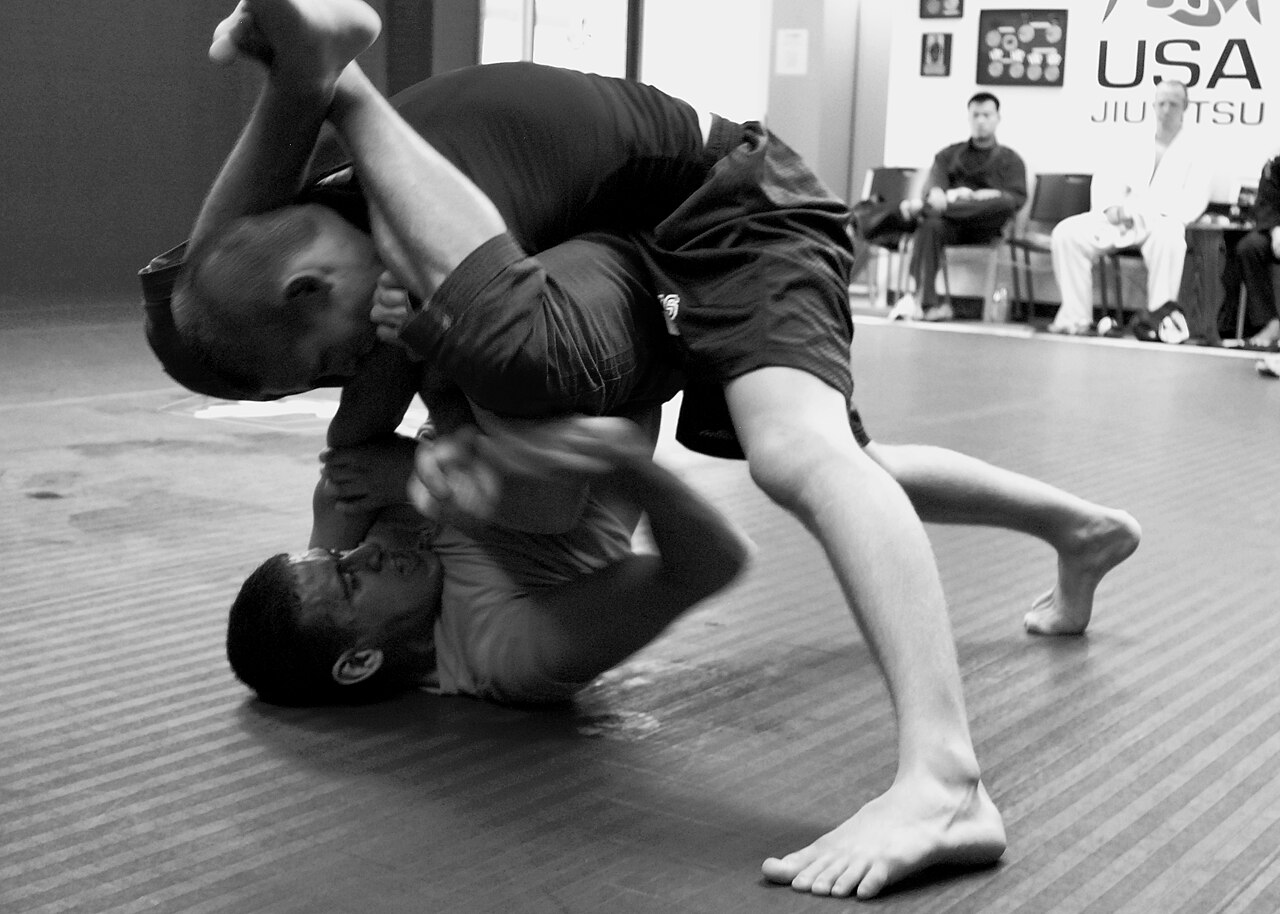
Which Is Better for Stress: Yoga or BJJ?
You're stressed. That's not a guess - it's a statistical certainty. Many Canadian adults report significant stress levels, and if you're living in Laval or Montreal, the combination of work pressure, commute times, and Quebec winters doesn't exactly help.
So you've decided to do something about it. Good. The question is what.
Two disciplines keep coming up in every "best stress relief activities" list: yoga and Brazilian Jiu-Jitsu. On the surface, they look like opposites. One involves stillness and breath; the other involves controlled combat. One fills your feed with sunset handstands; the other fills it with choke demonstrations.
But here's what nobody tells you: both work remarkably well for stress relief - they just work through completely different mechanisms. The right choice depends on who you are, what's driving your stress, and how your brain processes tension.
This isn't a hit piece on yoga. It's an honest comparison to help you pick the approach that actually fits your life.
How Stress Works in Your Body
Before comparing the two, you need to understand what stress actually does - because the solution depends on the problem.
When you're stressed, your body activates the sympathetic nervous system. Cortisol floods your bloodstream. Your heart rate climbs. Your muscles tense. Your brain enters a hyper-vigilant state where it's scanning for threats, replaying conversations, projecting worst-case scenarios.
This is the fight-or-flight response, and it was designed for short bursts - outrunning a predator, not sitting in traffic for 45 minutes thinking about your performance review.
Chronic stress means your body is stuck in this mode. The cortisol never fully drops. The muscle tension becomes baseline. Your sleep deteriorates. Your patience shrinks.
Effective stress relief needs to do two things: interrupt the stress response in the moment and build long-term resilience so you don't activate as easily. Both yoga and BJJ accomplish this - but through fundamentally different doors.
How Does Yoga Reduce Stress?
Yoga works primarily through the parasympathetic nervous system - the "rest and digest" counterpart to fight-or-flight.
Deep breathing activates the vagus nerve, which directly lowers heart rate and cortisol levels. Sustained holds build body awareness. Meditation trains your attention to stay present rather than spiraling into future worries or past regrets.
The research is solid. Studies have shown that yoga significantly reduces cortisol levels, anxiety symptoms, and perceived stress across multiple populations. It works. There's no argument there.
Yoga's strengths for stress relief:
- Immediate calming effect. You often feel noticeably calmer within a single session
- Breath control transfers to daily life. You learn to regulate your nervous system anywhere, anytime
- Flexibility and pain reduction. Chronic tension and back pain - common stress symptoms - improve with regular practice
- Low barrier to entry. You can practice at home, in a studio, or in a park with minimal equipment
- Scalable intensity. From gentle restorative classes to power vinyasa, there's a level for everyone
Where yoga can fall short:
- Your brain has to cooperate. If you're the type who lies in savasana thinking about your inbox, the calming effect is limited
- It doesn't address rumination directly. Meditation helps, but for people with high-spinning minds, sitting still can actually increase anxiety
- Limited social connection. Most yoga classes are individual experiences performed in proximity to others, not with them
- No external challenge. For people whose stress comes from feeling stuck or powerless, yoga may not provide the sense of agency they need
How Does BJJ Reduce Stress Differently?
Brazilian Jiu-Jitsu takes the opposite path. Instead of calming the stress response, BJJ floods your system with a challenge so demanding that the brain literally cannot maintain its stress patterns.
This is the concept of forced presence - and it's uniquely powerful.
When someone is actively trying to control your body on the mat, your brain doesn't have bandwidth for tomorrow's deadline, your credit card balance, or that argument with your partner. It can't. Every ounce of cognitive processing is devoted to the immediate physical problem in front of you. Your prefrontal cortex - the part responsible for worry and rumination - goes quiet because survival takes priority.
After an hour of this, your brain resets. The cortisol that was locked in a feedback loop gets burned off through intense physical exertion. Endorphins flood the system. And you walk out feeling a specific kind of clarity that people describe as "the BJJ high."
BJJ's strengths for stress relief:
- Guaranteed mental reset. You cannot think about work while someone is passing your guard. It's neurologically impossible
- Physical catharsis. The controlled physicality provides an outlet for pent-up tension and frustration
- Problem-solving under pressure. This builds genuine resilience - not just stress relief, but stress inoculation
- Deep community bonds. You're not training next to people; you're training with them. The social connection is built into every class
- Confidence and agency. Stress often stems from feeling powerless. BJJ systematically proves to you that you're more capable than you thought
- Progressive challenge. The belt system and constant skill development give your brain something constructive to focus on
Where BJJ requires adjustment:
- The first month is stressful itself. There's a learning curve, and the unfamiliarity can initially add stress before it relieves it
- Physical demands. You'll be sore, especially at the beginning. Recovery is part of the process
- Schedule commitment. You need to show up to an academy at specific times - it's not a roll-out-the-mat-at-home situation
- Ego management. Getting tapped by someone smaller than you is humbling. That's ultimately therapeutic, but it doesn't feel that way on day one
Adults BJJ Program (14+)
Gi fundamentals, takedowns, and competition training. 5 classes per week.
Explore Adults ProgramThe Science: What Research Says
Both disciplines have research backing their stress-relief claims, but the mechanisms differ.
Cortisol Reduction
Research suggests that martial arts practitioners show lower baseline cortisol levels than sedentary controls, comparable to long-term yoga practitioners. The key difference: martial artists also showed faster cortisol recovery after acute stress - meaning they bounced back more quickly when stress did hit.
Flow State
Psychologist Mihaly Csikszentmihalyi's research on flow states - the mental state where you're fully absorbed in an activity - consistently identifies martial arts as one of the most reliable flow triggers. The combination of high challenge, immediate feedback, and clear goals makes BJJ a near-perfect flow activity.
Yoga can trigger flow states too, particularly in advanced practice. But for beginners, the slow pace and introspective nature can actually work against flow, especially for people with restless minds.
Social Connection
Research suggests that group physical activities with cooperative elements produce significantly better mental health outcomes than individual exercise - even when controlling for intensity and duration. BJJ's partner-based training model aligns directly with this finding. Yoga's group setting provides some social benefit, but the interaction is typically before and after class, not during.
Long-Term Resilience
This is where BJJ pulls ahead in the research. Studies have shown that martial arts training - specifically arts involving live sparring - produces measurable improvements in stress tolerance, emotional regulation, and self-efficacy that exceed those of other physical activities including yoga, running, and weight training.
The proposed mechanism: regularly facing and overcoming controlled adversity literally rewires your stress response. Your brain learns that discomfort is survivable, that problems have solutions, and that you can perform under pressure. This isn't relaxation - it's inoculation.
Which Style Matches Your Personality?
Forget what's "objectively better." The best stress relief is the one you'll actually do consistently. And that depends on your personality.
Yoga might be your better fit if:
- You're an introvert who recharges alone
- Your stress manifests as physical tension, tightness, and pain
- You want something you can practice anywhere, including at home
- You prefer gradual, gentle progression
- Stillness feels restorative to you, not anxiety-inducing
- You already have an active social life and don't need your exercise to provide it
BJJ might be your better fit if:
- You get bored easily and need constant novelty
- Your stress manifests as restlessness, anger, or feeling stuck
- You thrive on challenge and competition (even friendly competition)
- Sitting still makes your brain louder, not quieter
- You want a built-in social community
- You respond to external structure, goals, and accountability
- You want to learn a practical skill, not just exercise
"I tried yoga for two years. I liked it, but my brain never fully shut up during class. The first time I did BJJ, I had 60 minutes of absolute silence in my head. That had never happened before." - Marc D., Gracie Laval member
The Plot Twist: They're Not Mutually Exclusive
Here's what the "BJJ vs yoga" framing misses: many serious BJJ practitioners also do yoga. The flexibility, breath control, and body awareness that yoga builds directly improve your jiu-jitsu performance.
At Gracie Laval, it's common to see members who do yoga on their off days. The two practices complement each other beautifully:
- Yoga improves BJJ by increasing flexibility, reducing injury risk, and teaching breath control under stress
- BJJ improves yoga by building the strength and body awareness that make advanced poses more accessible
- Together, they cover all bases - the parasympathetic calming of yoga plus the sympathetic reset of BJJ
If you have the time and inclination, doing both is the optimal approach. But if you have to pick one - and most people do, because life - here's the deciding question:
When you're at your most stressed, what does your body want to do - be still, or move?
If the answer is move, BJJ is your answer. If the answer is be still, yoga is your answer. Trust your nervous system - it knows what it needs.
What a Week of Stress Relief Looks Like at Gracie Laval
For adults in Laval and the greater Montreal area who want to use BJJ as their primary stress management tool, here's what a realistic week looks like:
Monday 7:15 PM - Adult BJJ class. Start the week by leaving work stress on the mat. Sixty minutes of technique drilling and live rolling. You drive home with a clear head.
Wednesday 7:15 PM - Return to class. The techniques from Monday are still in your body. You refine them. You roll with different partners. The mid-week stress never had a chance to accumulate.
Saturday 10:45 AM - Weekend class. Optional but recommended. Slower pace, more technique focus. Great for consolidating what you learned during the week.
That's it. Two to three sessions per week, and you have a stress management system that's more effective, more engaging, and more sustainable than anything else you've tried.
Professor Louis-Philippe and the coaching team understand that most adults aren't training to compete - they're training to feel better, move better, and handle life better. The classes are structured accordingly.
The Real Question
You didn't land on this article because you're doing a research project. You landed here because you're stressed, you're looking for a solution, and you want someone to tell you what actually works.
Here's the honest answer: both work. But only one works for you.
If you've tried yoga and it stuck - keep doing yoga. It's working. Don't fix what isn't broken.
If you've tried yoga and it didn't stick, or if you've never tried either, or if you're the kind of person whose brain doesn't quiet down unless it's forced to - come try a class.
Your first class at Gracie Laval is free. No commitment, no contract, no pressure. Show up, roll, and see how you feel afterward. If the stress is gone - and it will be - you'll know you found your thing.
We're at 3274 Blvd. Saint-Martin O, Suite 201, Laval, Quebec - 15 minutes from anywhere in Laval, easy access from Montreal. Free parking at the door.
The mat is the best therapist in town. And it never charges by the hour.