 EN
EN FR
FR 中文
中文 ES
ES PT
PT عربي
عربي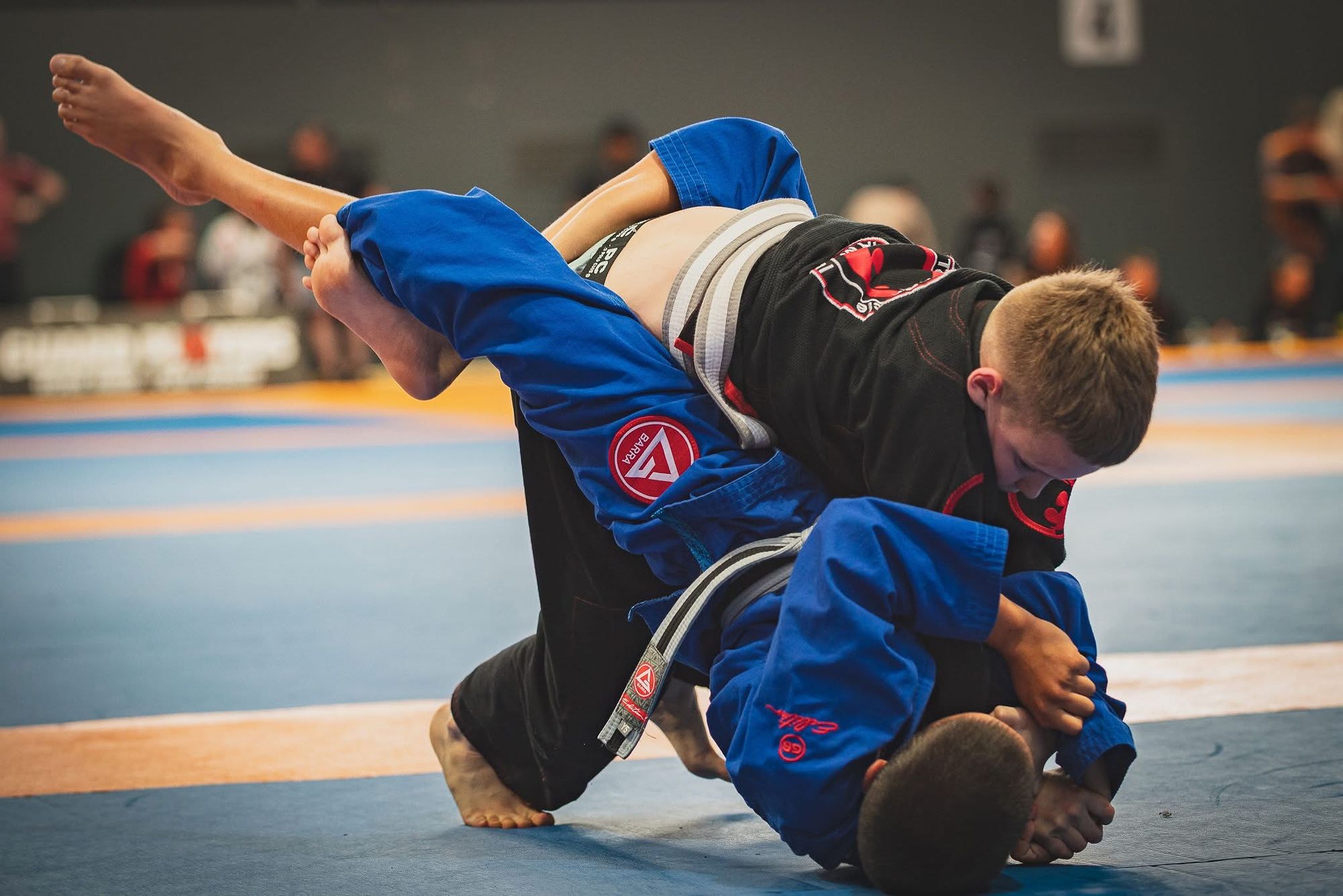
When "Just Sit Still" Doesn't Work
If you're a parent of a child with ADHD, you already know the daily struggle. The forgotten homework. The half-finished tasks. The teacher's notes: "Your child is bright but can't focus." The fidgeting, the impulsivity, the constant motion that never seems to have an off switch.
You've tried everything. Structured routines. Reward charts. Maybe medication. Some things help. But you know, deep down, that your child needs something more - an outlet that doesn't just burn energy, but actually rewires how they focus, regulate, and engage with the world.
This is where Brazilian Jiu-Jitsu enters the conversation. Not as a miracle cure. Not as a replacement for professional support. But as a complement that addresses the exact challenges ADHD presents - in ways that traditional sports simply can't.
Why Traditional Sports Fail ADHD Kids
Traditional team sports look great on paper. They provide exercise, social interaction, and structure. But for a child with ADHD, the reality is often frustrating:
Soccer and hockey involve long stretches of waiting - bench time, positional play, standing in formation - with no active engagement. Performance is judged relative to teammates, so a child who struggles with consistency stands out negatively. Baseball is worse: twenty minutes of standing in the outfield between plays, with brief moments of intense focus separated by nothing. Swimming offers repetitive, monotonous laps that are torture for ADHD brains craving novelty, with minimal social interaction and no immediate feedback loop.
The common thread? These sports have gaps - periods where a child with ADHD has nothing to do, nothing to focus on, and nothing to engage their attention. Those gaps are where frustration builds, behavior issues emerge, and kids decide they "don't like sports."
The problem isn't the child. It's the sport.
Why BJJ Works: The ADHD Brain Loves This
Brazilian Jiu-Jitsu is structured in a way that seems almost designed for the ADHD brain. Here's why:
Constant Engagement - Zero Downtime
From the moment class starts to the moment it ends, your child is active. Warm-ups involve movement. Technique requires watching, then immediately doing. Drilling means hands-on repetition. Rolling demands complete attention every second.
There is no bench. There is no outfield. There is no moment where your child's brain is left unoccupied. For an ADHD brain that struggles with unstructured downtime, this is everything.
Immediate Sensory Input
ADHD brains are often under-stimulated, which is why children seek sensation through fidgeting and constant movement. BJJ provides intense, appropriate sensory input: physical contact (deep pressure with calming effects), proprioceptive feedback (body awareness in space), constant exertion, and tactile engagement (gripping the Gi, adjusting position).
Occupational therapists often recommend deep pressure and proprioceptive input for ADHD children. BJJ delivers both in abundance, naturally integrated into every class.
Clear Rules and Immediate Feedback
The ADHD brain thrives on clarity and immediacy. BJJ provides both:
- Clear rules: Tap when you're caught. Respect your partner. Listen when the instructor speaks. Start and stop when told.
- Immediate feedback: If your technique is wrong, it doesn't work - right now, not at a test next month. If your technique is right, you feel it immediately.
- Binary outcomes: In drilling and sparring, you either escape the position or you don't. There's no ambiguity, no waiting for a referee's judgment, no "maybe."
This tight feedback loop keeps ADHD children engaged because the consequences of their actions are instant and clear. They don't need to sustain attention for 30 minutes to see a result - every 10 seconds brings a new micro-outcome.
Kids BJJ Program (Ages 3-13)
Apprentice, Junior, and Teens classes. First class free.
Explore Kids ProgramWhat the Research Says
Multiple studies have examined the relationship between martial arts and ADHD symptoms. While BJJ-specific research is still emerging, the broader findings are compelling:
Focus and attention: Studies published in journals like the Journal of Attention Disorders have found that structured physical activity, including martial arts, can improve sustained attention in children with ADHD - the structured, physically demanding nature of training was identified as the key factor.
Executive function: Research has demonstrated that martial arts practice can improve executive function in children - planning, focus, and impulse regulation - precisely the functions most affected by ADHD.
Impulse control: A meta-analysis in Frontiers in Psychology found that regular martial arts practice was associated with reduced impulsivity in children with attention difficulties. The hypothesis: martial arts explicitly train the stop-think-act sequence through controlled sparring.
Self-regulation: Studies consistently show martial arts practitioners develop superior self-regulation compared to other sports. The controlled aggression in BJJ - intense but not reckless, assertive but not dangerous - directly trains the ADHD brain's weakest link.
**Important note:** BJJ is not a replacement for medical treatment or professional ADHD management. It is a complement - a physical practice that supports and enhances the strategies your child's healthcare team has already put in place.
How a Class at Gracie Laval Is Structured
Understanding the class structure helps you see why it works for ADHD children:
Warm-up (10 min): Movement-based - running, animal movements (bear crawls, crab walks), light tumbling. Everyone moves simultaneously. No standing in line.
Technique (15-20 min): The instructor demonstrates 2-3 techniques in clear steps. After each demo, kids immediately practice with a partner. The cycle is: watch (30 seconds) then do (3-5 minutes). Short attention windows by design.
Drilling (10-15 min): Repetitive practice with increasing resistance. Each drill has a clear objective: "escape this position," "pass this guard." This is where muscle memory builds.
Games and rolling (10-15 min): Age-appropriate sparring or BJJ-based games like "King of the Mat" or "Shark Tank" - structured, fun, competitive formats using real techniques.
Cool-down (5 min): Stretching, followed by specific praise: "Great focus today, Marcus." "Sarah, I saw you hit that escape perfectly." Immediate recognition that reinforces the behaviors you want repeated.
Every segment matches an ADHD attention span - short, varied, and physically engaging.
The Belt and Stripe System: Built-In Motivation
One of ADHD's cruelest features is that it makes long-term goals feel abstract and unachievable. The BJJ belt system solves this with visible, tangible, incremental milestones.
- Stripes (small pieces of tape on the belt) are awarded every few weeks or months for consistent training and improvement
- Belt promotions (new color) happen every 6-12 months for kids who train regularly
- Each stripe and belt is earned in front of the class, creating a moment of recognition and celebration
For an ADHD child who struggles with delayed gratification, seeing a stripe added to their belt is a powerful neurological event. It's concrete. It's immediate. And it says: "Your effort counts. Your progress is real. Keep going."
The stripe system also teaches something ADHD children desperately need to learn: that consistent small efforts lead to meaningful outcomes. Not in theory - in practice, on their actual belt, visible every time they tie it.
Small Class Sizes = Individual Attention
Large team sports inherently dilute individual attention. A hockey coach with 15 kids on a team cannot possibly give meaningful feedback to each child every practice. For an ADHD child who needs more frequent redirection and encouragement, this is a recipe for disengagement.
At Gracie Laval, kids classes are kept small enough that Professor LP and Coach Thomas can see every student, every class. This means:
- Immediate redirection when focus drifts - not punishment, just a gentle "eyes on me" that brings them back
- Personalized feedback - "Your hip escape is getting better" is more motivating than generic praise
- Adapted pacing - if a child needs an extra repetition or a different explanation, they get it
- Behavioral awareness - the coaching team notices patterns (fatigue, overstimulation, frustration) and adjusts accordingly
This isn't a special accommodation. It's just good coaching. But for ADHD children, good coaching is the difference between a sport they love and a sport they quit.
Coaching Approach With Neurodivergent Kids
Professor Louis-Philippe and Thomas coach with understanding, not just authority. Their approach with neurodivergent children centers on patience over pressure - creating an environment so engaging that attention follows naturally, rather than demanding it. When a child is dysregulated, the answer isn't "sit down" - it's "let's drill." Physical engagement is the reset button.
As children progress, they earn more responsibility: leading warm-ups, demonstrating for newer students, choosing sparring partners. This graduated independence builds executive function in a supported environment. And the coaching team celebrates effort and process, not just outcomes - for ADHD children used to hearing about their shortcomings, that reframe is transformative.
What Parents Tell Us
"My son was asked to leave two sports teams because of his behavior. Within a month of BJJ at Gracie Laval, he was calmer at home, more focused at school, and actually excited about going to practice. I cried the first time he got a stripe on his belt." - Isabelle R., parent
"We tried everything - soccer, swimming, hockey. Nothing held his attention for more than a few weeks. BJJ is the first activity my son has stuck with for over a year. His psychologist has noticed measurable improvements in his impulse control." - David P., parent
"The coaches here understand my daughter. They don't treat her ADHD as a problem - they channel her energy into something productive. She went from 'the disruptive kid' to a leader in her class." - Catherine L., parent
These aren't paid testimonials. They're real parents watching real transformation in their children.
What BJJ Won't Do (And Shouldn't Be Expected To)
Honesty matters more than sales. Here's what BJJ is not:
- Not a replacement for medication - BJJ complements prescribed treatment, it doesn't replace it
- Not a cure for ADHD - it helps manage symptoms, not eliminate the condition
- Not an instant fix - benefits emerge over weeks and months of consistent training
- Not therapy - it's an excellent addition to professional care, not a substitute
What BJJ is: a physical practice that develops the exact skills ADHD makes difficult - focus, impulse control, self-regulation, and sustained effort. Combined with professional support, it can be a game-changer.
Taking the First Step
If your child has ADHD and you've been searching for an activity that actually works - that holds their attention, channels their energy, and builds the skills they struggle with most - BJJ deserves a serious look.
Your child's first class at Gracie Laval is free. We provide the Gi. Just let us know about your child's needs when you book, and the coaching team will be prepared. Your child will be welcomed into an environment designed to bring out their best.
"The mat doesn't care about diagnoses. It only cares about effort. And every kid who gives effort belongs here." - Professor Louis-Philippe, Gracie Laval