 EN
EN FR
FR 中文
中文 ES
ES PT
PT عربي
عربي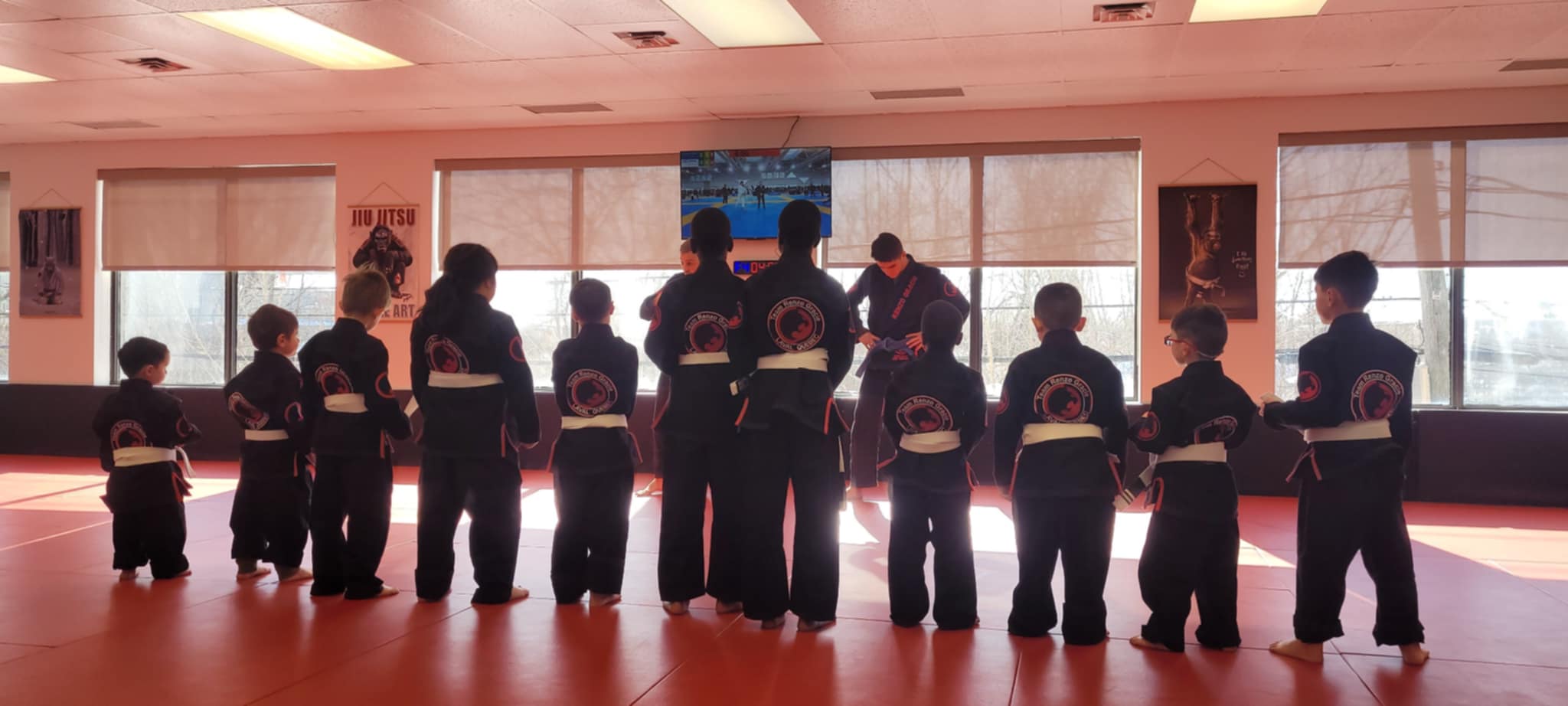
Building the Foundation
Children between ages 5 and 8 are at a remarkable stage of development. They can follow multi-step instructions, they are eager to learn skills, and they are beginning to understand concepts like teamwork, fair play, and personal responsibility. This is the ideal window to introduce structured martial arts training - and the Junior program at Gracie Laval is built specifically for this age group.
The Junior program offers 45-minute classes that go beyond games and movement. Your child will learn real Brazilian Jiu-Jitsu techniques, practice them with partners, and begin developing the character traits - discipline, respect, perseverance - that define a martial artist.
What Junior Classes Look Like
Every Junior class follows a consistent structure that children can rely on. Knowing what comes next helps kids focus and reduces anxiety, especially for newcomers.
Lineup and Opening (3 Minutes)
Students line up by belt rank and greet the instructor. The coach may review a principle of the week - something like "respect your partner" or "effort beats talent." This brief ritual sets the tone for the rest of class.
Warm-Up (8-10 Minutes)
Warm-ups combine fun with purpose. You will see:
- Running drills - sprints, lateral shuffles, and partner races
- BJJ-specific movements - forward rolls, backward rolls, hip escapes, and technical stand-ups
- Bodyweight exercises - push-ups, squats, and plank holds scaled for young bodies
- Coordination challenges - combining movements in sequences that build muscle memory
The warm-up is active and engaging. Kids are moving the entire time, building both fitness and familiarity with the movements they will use in techniques later.
Technique Instruction (12-15 Minutes)
This is the core of the Junior class. The instructor demonstrates one or two techniques appropriate for this age group. At the 5-8 level, foundational techniques include:
- Takedowns - safe, controlled ways to bring a partner to the mat
- Positions - understanding mount, guard, side control, and back control
- Escapes - how to get out of a bad position using technique rather than strength
- Submissions - age-appropriate holds with emphasis on control and the tap rule
The coach demonstrates each technique multiple times, explains it in clear language, and then pairs students up to practice. Partners are matched by size and experience level. First-time students are always paired with someone who knows how to be a helpful partner.
Partner Drills (10-12 Minutes)
After seeing the technique, students drill it with their partner. Drilling means repeating the movement at a controlled pace, with both partners taking turns. The coach walks the mat, offering corrections and encouragement.
This is where real learning happens. Repetition builds muscle memory, and working with a partner teaches children how to communicate, cooperate, and be responsible for someone else's safety.
Drills often progress in difficulty:
- Practice the technique slowly with a cooperative partner
- Add a small amount of resistance so the technique feels more realistic
- Combine the technique with a previous skill (for more experienced students)
Positional Sparring or Games (5-8 Minutes)
Depending on the day and the skill level of the class, the session may include positional sparring. This is not a free-for-all. Students start in a specific position - for example, one student in mount and the other on bottom - and work toward a specific goal.
Positional sparring teaches children how to apply techniques under mild pressure while maintaining control. The coach supervises every pair and intervenes if intensity gets too high.
For newer students, this portion may be replaced with a game that reinforces the day's technique.
Closing (3 Minutes)
Class ends with a lineup, a review of what was learned, and positive reinforcement. Coaches may recognize students for great effort, helping a partner, or demonstrating a principle of the week. Stripe promotions happen during this time as well.
Kids BJJ Program (Ages 3-13)
Apprentice, Junior, and Teens classes. First class free.
Explore Kids ProgramFoundational Techniques They Will Learn
Over the course of the Junior program, your child will build a solid base of BJJ knowledge. Here is what that foundation looks like:
Positions and Awareness
Before learning any submissions, children need to understand where they are on the mat and why it matters. The Junior program teaches the four fundamental positions:
- Guard - on your back with your legs controlling your partner
- Mount - sitting on top of your partner's torso
- Side control - controlling your partner from the side
- Back control - controlling your partner from behind
Understanding these positions is like learning the board before playing the game. Everything in BJJ flows from positional awareness.
Escapes
Escapes are taught before attacks. This is intentional. A child who knows how to escape a bad position feels safe and confident. A child who only knows attacks will panic when things go wrong.
Junior students learn how to escape from mount, side control, and headlocks using proper technique - not strength. These skills transfer directly to real-world situations where a child might need to create space and get back to their feet.
Basic Submissions
As students progress, they learn age-appropriate submissions with strict emphasis on the tap rule. Submissions are taught as a way to control a situation, not to hurt someone. Every child learns that when their partner taps, they release immediately. No exceptions.
Self-Defense Applications
The Junior program includes practical self-defense scenarios. How to break free from a grab. How to get up safely if pushed to the ground. How to maintain distance from someone being aggressive. These are taught in a way that builds confidence without creating aggression.
Character Development
BJJ is a vehicle for personal growth. For children ages 5 to 8, the character development component is just as important as the physical skills.
Discipline
Showing up on time, lining up properly, listening when the coach speaks, and following through on drills - these are acts of discipline that become habits. Children who train regularly develop an internal structure that supports them in school, at home, and in every activity they pursue.
Respect
Respect in BJJ is built into every interaction. Students bow when they step on the mat. They shake hands before and after working with a partner. They address their instructor properly. These are not empty rituals - they create a culture where every person's time, effort, and safety are valued.
Perseverance
BJJ is challenging by nature. Techniques do not work perfectly the first time. Partners are sometimes bigger or more experienced. Progress feels slow some weeks and fast others. Learning to stay committed through the hard days is one of the most valuable lessons BJJ teaches.
Problem-Solving
Every roll and every drill is a problem to solve. How do I escape this position? How do I control my partner from here? What do I do when my first plan does not work? BJJ develops critical thinking and adaptability in a way that few other activities can match.
The Monday-Wednesday Schedule
Junior classes at Gracie Laval run on Monday and Wednesday. The 45-minute format fits neatly into after-school routines, and the twice-a-week frequency gives children enough mat time to build skills without overloading their schedule.
Consistent attendance makes a real difference at this age. Children who train twice a week progress noticeably faster than those who train once, simply because the movements and concepts stay fresh between sessions.
Check our schedule page for exact class times.
What Progress Looks Like
Parents often ask how they will know their child is improving. Here are the signs to look for:
- They remember and can explain techniques they learned in class
- They are more comfortable with physical contact and working with different partners
- Their coordination and balance improve visibly over weeks
- They show more patience and focus both on and off the mat
- They earn stripes on their belt, which mark specific skill milestones
- They look forward to class and ask when the next session is
Progress in BJJ is not always linear. Some weeks your child will seem to plateau, and then suddenly everything clicks. Trust the process and celebrate consistency.
Getting Started
The first class is always free at Gracie Laval. Your child does not need any experience, any equipment, or any specific physical ability. We provide a Gi for the first session. Just bring them in comfortable athletic clothes with a water bottle.
If you are unsure whether the Junior program is the right fit, bring your child in and let them experience a class. You can watch from our viewing area and see exactly how the coaches work with students at this age.
Kids BJJ Program (Ages 3-13)
Apprentice, Junior, and Teens classes. First class free.
Explore Kids Program