
 EN
EN FR
FR 中文
中文 ES
ES PT
PT عربي
عربي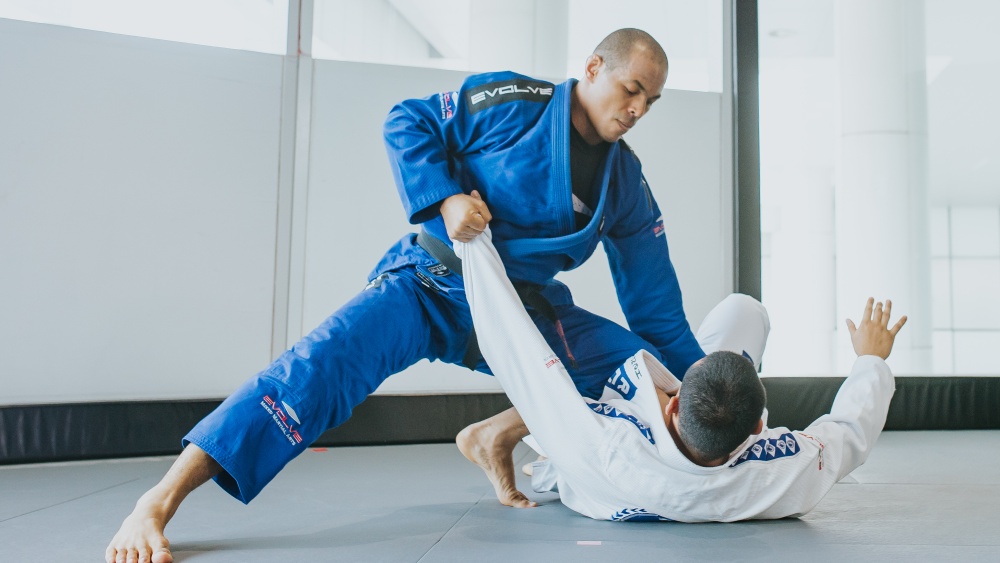
Why Is Jiu-Jitsu Better Self-Defense for Women?
You've probably seen the flyers: "Women's Self-Defense Workshop - One Saturday, Learn to Protect Yourself!"
Here's the uncomfortable truth about those workshops: a four-hour seminar doesn't prepare you for a real confrontation. It gives you a false sense of security, which is arguably more dangerous than having no training at all.
Real self-defense isn't a set of memorized moves. It's a trained response that works under adrenaline, under fear, and against someone who is bigger, stronger, and not following a script. That's why Brazilian Jiu-Jitsu isn't just one option for women's self-defense - it's the answer.
What Self-Defense Skills Does BJJ Teach?
The entire foundation of BJJ was built on one principle: a smaller, weaker person can control and submit a larger, stronger attacker using leverage, technique, and body mechanics.
This isn't marketing. It's physics.
When you learn to use your hips as a lever, your legs as a frame, and your opponent's momentum against them, raw strength becomes almost irrelevant. A 130-pound woman who has trained BJJ for six months can escape the mount of a 200-pound untrained man. Not by overpowering him - by understanding angles, frames, and the mechanics of the human body.
This is what separates BJJ from striking-based martial arts like kickboxing or Muay Thai. In a striking art, size and power matter enormously. You can learn a perfect punch, but if your attacker outweighs you by 80 pounds, that punch may not stop them. On the ground - where most real-world altercations end up - technique is the great equalizer.
"I was the smallest person in class my first day. Within two months, I was escaping positions against training partners twice my size. That feeling - of knowing your body can do more than you thought - changes everything." - Sarah K., Gracie Laval member
Real-World Scenarios: What Actually Happens
Self-defense statistics paint a clear picture of what women face:
- Most assaults happen at close range - grabs, holds, pins against a wall or the ground
- The attacker almost always has a size advantage - which is precisely why they chose that target
- Fights go to the ground within seconds - the clinch and ground positions dominate real encounters
- Freezing is the most common response - not because of weakness, but because the brain hasn't been trained for that level of stress
BJJ directly addresses every single one of these realities.
Escaping Holds and Grabs
From your first class, you learn how to break grips, escape wrist holds, and create distance when someone is controlling you. These aren't theoretical techniques - they're drilled until they become automatic.
Surviving on the Ground
If an attacker takes you to the ground, most people panic. A BJJ practitioner doesn't. You learn to fight from your back using a position called "guard" - where your legs become your primary weapon for controlling distance, sweeping your attacker off balance, and creating opportunities to escape or submit.
Controlling Without Striking
Here's something most people don't consider: in many real-world scenarios, you don't want to strike. You want to control. Maybe it's a situation involving someone you know, a public confrontation, or a scenario where escalating with strikes could make things worse. BJJ gives you the ability to control someone - pin them, hold them, or put them to sleep - without throwing a single punch.
Adults BJJ Program (14+)
Gi fundamentals, takedowns, and competition training. 5 classes per week.
Explore Adults ProgramHow Does Confidence Help with Self-Defense?
The most profound benefit of BJJ for women isn't the ability to execute a triangle choke. It's the transformation that happens between your ears.
There's a specific kind of confidence that comes from competence under pressure. Not affirmations. Not visualization. The real thing - earned through hundreds of hours of controlled struggle against resisting partners.
When you've spent six months being put in uncomfortable positions and finding your way out, your relationship with fear fundamentally shifts. You stop avoiding confrontation because you're afraid, and start choosing your response because you're prepared.
This translates far beyond the mat:
- Walking alone at night feels different when you know you're not helpless
- Setting boundaries becomes easier when you've practiced asserting yourself physically
- Handling workplace pressure comes more naturally when you've remained calm while someone was trying to choke you
BJJ doesn't teach you to be aggressive. It teaches you that you are capable - and that knowledge is permanent.
BJJ vs. Other Martial Arts for Women
Not all martial arts are equal when it comes to practical self-defense for women. Here's an honest breakdown:
Kickboxing / Muay Thai
- Great cardio and striking skills
- Size and power advantage still matters significantly
- Doesn't address ground scenarios (where most assaults end up)
- Requires distance management - most assaults start at close range
Krav Maga
- Designed for real-world scenarios
- Techniques are often practiced without full resistance
- Curriculum varies wildly between schools - no universal standard
- Limited ground work
Karate / Taekwondo
- Good for discipline and fitness
- Techniques are often practiced in pre-arranged forms (kata)
- Minimal live sparring against resisting opponents
- Kicking range is impractical in close-range altercations
Brazilian Jiu-Jitsu
- Built for smaller people to defeat larger opponents
- Every technique is practiced against fully resisting partners
- Comprehensive ground game - the most critical gap in other arts
- No striking required - effective without needing to generate power
- Progressive belt system with clear milestones
The key difference is aliveness. In BJJ, you practice your techniques against people who are actively trying to stop you. This builds real-world applicable skill, not choreographed responses that crumble under stress.
Does Self-Defense Training Change How You Feel?
Research consistently links physical activity to improved mental health, but BJJ offers something beyond just exercise.
Stress relief through controlled aggression. After a difficult day, there's something uniquely therapeutic about rolling (sparring) for an hour. It demands your complete attention - you literally cannot think about work, bills, or stress when someone is trying to pass your guard.
Community and belonging. BJJ academies tend to form unusually tight communities. You go through controlled discomfort together, you help each other improve, and you celebrate each other's progress. For many women, the gym becomes a second family.
Body image transformation. BJJ shifts your relationship with your body from how it looks to what it can do. When you hit your first sweep on someone heavier than you, aesthetics stop being the measure. Function takes over. That reframe is powerful.
"I came for self-defense. I stayed for how it made me feel about myself. Stronger, calmer, more present. It's the best therapy I've ever had." - Nadia M., Gracie Laval member
What Class Culture Looks Like at Gracie Laval
We understand that walking into a martial arts gym for the first time can be intimidating - especially as a woman. Here's what we've built at Gracie Laval to make sure that barrier is as low as possible:
Respect is non-negotiable. Every training partner respects your pace, your boundaries, and your comfort level. If you want to go lighter, you go lighter. Period.
Consent in training. You choose who you roll with. You can decline any partner at any time without explanation. This isn't a suggestion - it's a rule.
Controlled pace for beginners. Your first classes are technique-focused with drilling. You won't be thrown into sparring until you're ready, and even then, you'll be paired with experienced partners who know how to keep things safe.
Diverse training environment. Our classes include women, men, teenagers, and people of all fitness levels. The common thread isn't gender or size - it's the desire to learn and improve.
Experienced coaching. Professor Louis-Philippe and the coaching team have years of experience making new students feel welcome. They'll check in with you before, during, and after class.
Physical Fitness Beyond Self-Defense
While self-defense is the headline, the physical benefits of BJJ deserve their own section:
- Full-body functional strength - BJJ uses every muscle group in practical movement patterns
- Cardiovascular conditioning - a one-hour class burns 500-800 calories
- Flexibility and mobility - the positions require and develop range of motion
- Core strength - your core is engaged in virtually every movement
- Weight management - consistent training reshapes your body composition
Unlike gym workouts that isolate muscles, BJJ develops practical, integrated fitness. You're not training your body to look a certain way - you're training it to perform. The aesthetic results are a side effect.
Can You Defend Yourself Without Fighting?
Every woman who trains BJJ follows a similar arc:
Week 1-2: Nervous, confused, slightly overwhelmed. Everything feels wrong. You forget techniques five minutes after learning them. This is completely normal.
Month 1-2: Techniques start clicking. You hit your first escape against a resisting partner. You realize your body can do things you didn't expect. The nervousness is replaced with curiosity.
Month 3-6: You start seeing the game. Instead of reacting blindly, you anticipate. You have answers to common positions. You help newer students - which cements your own knowledge. Confidence isn't something you hope for; it's something you feel.
Month 6+: BJJ becomes part of your identity. You move differently, think differently, carry yourself differently. The woman who was nervous to walk through the door is now helping other women do the same.
This pipeline works because it's based on real competence, not motivational slogans. You can't fake your way through a roll. Every bit of confidence you gain on the mat is earned and permanent.
Your First Step
If you've been thinking about self-defense, about fitness, about doing something that genuinely challenges you and changes how you see yourself - stop thinking and start.
Your first class at Gracie Laval is free. We provide the Gi. We'll walk you through everything. You'll leave sweaty, probably confused, and almost certainly thinking "I want to do that again."
That feeling? It's the beginning.
"To every woman who's been on the fence: just go. One class. That's all it takes to realize this is what you've been looking for." - Lea T., Gracie Laval member since 2024