
 EN
EN FR
FR 中文
中文 ES
ES PT
PT عربي
عربي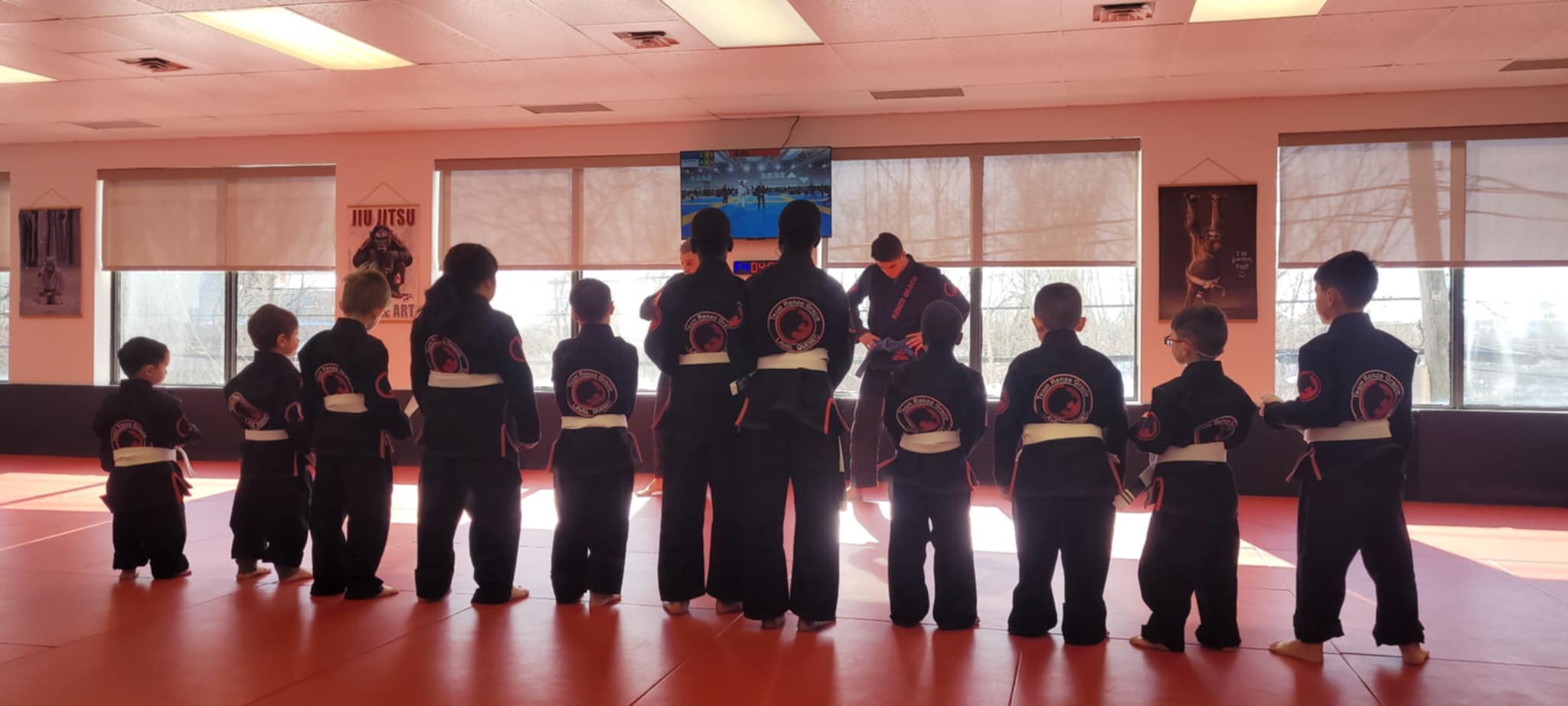
A Parent's Guide to Day One
Your child is about to try Brazilian Jiu-Jitsu for the first time. Maybe they asked for it after seeing it on YouTube. Maybe you have been looking for an activity that builds confidence, discipline, and physical fitness all at once. Either way, you probably have questions about what actually happens inside that first class.
This guide covers everything from what to pack in their bag to what the coaches are doing when your child looks like they are "just playing games." By the end, you will know exactly what to expect - and why so many Laval families stick with BJJ long after that first session.
Before the Class
What to Wear
Keep it simple. Dress your child in comfortable athletic clothing - shorts or joggers and a t-shirt. Avoid anything with zippers, buttons, or hard pockets, as these can catch fingers during partner drills.
At Gracie Laval, we provide a Gi (the traditional BJJ uniform) for the first class at no charge. You do not need to purchase anything before showing up. If your child decides to continue, your instructor will help you choose the right Gi size later.
Pack a water bottle and a small towel. That is everything they need.
What Age Groups Are Available?
We offer three kids programs based on age and development:
- Apprentice (Ages 3-4): 30-minute classes focused on coordination, listening, and fun movement games
- Junior (Ages 5-8): 45-minute classes with foundational techniques, partner drills, and character development
- Teens (Ages 9-13): Full technique classes with age-appropriate sparring and goal-setting
Each program is designed around how children at that specific age learn best. A 3-year-old does not learn the same way an 8-year-old does, and our coaches understand that difference deeply.
When to Arrive
Plan to arrive 10 to 15 minutes early. This gives you and your child time to:
- Meet the instructor and get comfortable with the space
- Change into the borrowed Gi
- Watch a few minutes of the previous class to see the environment
- Ask any questions you have about your child's needs
This early window matters. It lets your child get familiar with the mat area and the coach before class begins. Walking into an already-started class is more overwhelming than arriving early and settling in.
Kids BJJ Program (Ages 3-13)
Apprentice, Junior, and Teens classes. First class free.
Explore Kids ProgramWhat Happens During Class
Here is a step-by-step breakdown of a typical kids BJJ class, so there are no surprises.
The Lineup (2-3 Minutes)
Class begins with all students lining up by belt rank. Your child will join the end of the line. The instructor greets the class, sets the tone, and reviews any important reminders. This brief routine teaches respect, attention, and structure from day one.
Warm-Up (5-10 Minutes)
Warm-ups in kids BJJ look different from adult fitness routines. Depending on the age group, you will see:
- Running games like relay races or tag variations that build agility
- Animal walks - bear crawls, crab walks, frog jumps - that develop coordination and strength
- BJJ-specific movements like forward rolls, hip escapes, and breakfalls (introduced gently for beginners)
- Partner exercises that get kids comfortable with physical contact in a fun, controlled way
If your child does not know the movements yet, the coach will guide them through it. There is no penalty for not knowing what a bear crawl is on day one.
Technique of the Day (10-15 Minutes)
The instructor demonstrates one or two age-appropriate techniques. For younger children, this might be as simple as learning how to safely take someone down or escape from the bottom position. For older kids, it could involve a specific sweep or submission setup.
Demonstrations are visual and hands-on. The coach shows the technique multiple times, explains it in simple language, and then has the students practice with a partner.
Your child will be paired carefully. Coaches consider size, age, experience level, and temperament when creating pairs. First-time students are usually paired with more experienced kids who know how to be good partners.
Drilling and Games (10-15 Minutes)
This is where learning meets fun. Kids practice the technique they just saw, sometimes through structured drills and sometimes through games that reinforce the same skills. For example, a game of "king of the mat" teaches balance and base without kids even realizing they are learning a fundamental BJJ concept.
Games are not filler. They are carefully designed to develop specific skills while keeping energy and engagement high.
Positional Sparring or Free Play (5-10 Minutes)
Depending on the age group and the individual class, the session may end with some form of controlled sparring or structured free play.
For Apprentice kids (ages 3-4), this usually means movement-based games rather than sparring. For Junior and Teens groups, there may be positional sparring where students start in a specific position and work toward a goal. This is supervised closely, and coaches actively manage intensity.
Your child will not be forced to spar on day one. If they are not ready, they can watch or participate in a modified version.
The Closing (2-3 Minutes)
Class ends with students lining up again. The coach reviews what they learned, gives out positive reinforcement, and may award stripes to students who have earned them. There is often a team clap or cheer to end on a high note.
How Coaches Handle Shy or Nervous Kids
This is one of the most important sections for parents, because nearly every child is at least a little nervous on their first day. Some are very nervous. That is completely normal and expected.
Here is what our coaches do:
They Do Not Force Participation
If your child wants to sit on the edge of the mat and watch for the first 10 minutes, that is perfectly fine. Coaches will invite them to join in when they seem ready, but they will never pressure or single out a child who needs time to warm up.
They Use Experienced Students as Anchors
New kids are often paired with friendly, experienced students who can help them feel welcome and show them the ropes. This peer support is incredibly effective - children respond well to other children who are calm and encouraging.
They Keep It Fun
For younger children especially, the first few classes focus more on games and movement than on technique. The goal is to get your child excited about coming back, not to overload them with information. Technique depth comes naturally once they are comfortable.
They Communicate With Parents
After class, your child's coach will check in with you. They will share how the class went, what they noticed, and what to expect going forward. If there are any concerns - about behavior, shyness, physical limitations, or anything else - this is the time to discuss them.
When to Expect the First Stripe
The stripe system is how BJJ tracks progress within each belt level. Children typically earn their first stripe after consistent attendance and demonstrated improvement in basic skills. At Gracie Laval, this usually happens within the first four to eight weeks of regular training, depending on how often your child attends.
Stripes are not just about technique. Coaches also consider:
- Attitude and effort in class
- Respect toward partners and instructors
- Listening skills and following instructions
- Consistency of attendance
When your child receives their first stripe, it is a genuine achievement. The look on their face when the coach wraps that piece of tape around their belt is something you will not forget.
Parents Can Watch
At Gracie Laval, parents are welcome to watch every class from our designated viewing area. You can see exactly what your child is doing, how the coaches interact with students, and the overall atmosphere of the academy.
Some parents watch every session. Others drop off and pick up. Both are completely fine. What matters is that you feel comfortable and informed about your child's training.
A few things to keep in mind while watching:
- Let the coach handle behavior. If your child is acting out or not participating, the instructor will manage it. Calling out from the sideline can create confusion.
- Celebrate effort, not results. After class, ask "What did you learn?" rather than "Did you win?"
- Be patient. Some kids take two or three classes before they really open up. That is normal and healthy.
What to Do After the First Class
After your child's first session, take a few minutes to talk about what they experienced. Ask open-ended questions:
- What was the most fun part?
- Did you learn anything cool?
- Do you want to come back?
Most kids are excited and want to return. Some need a day or two to process. Either way, consistency is key. If your child enjoyed the experience, aim for at least two classes per week to build momentum and let the skills stick.
Kids BJJ Program (Ages 3-13)
Apprentice, Junior, and Teens classes. First class free.
Explore Kids ProgramFinding the Right Schedule
Our kids programs run on a regular weekly schedule:
- Apprentice (Ages 3-4): Monday and Wednesday
- Junior (Ages 5-8): Monday and Wednesday
- Teens (Ages 9-13): Check our schedule page for current times
The first class is always free. No registration, no commitment. Just bring your child in comfortable clothes and let them experience it.
If you have questions about which program is right for your child, do not hesitate to reach out. Our coaches are happy to help you find the best fit.