
 EN
EN FR
FR 中文
中文 ES
ES PT
PT عربي
عربي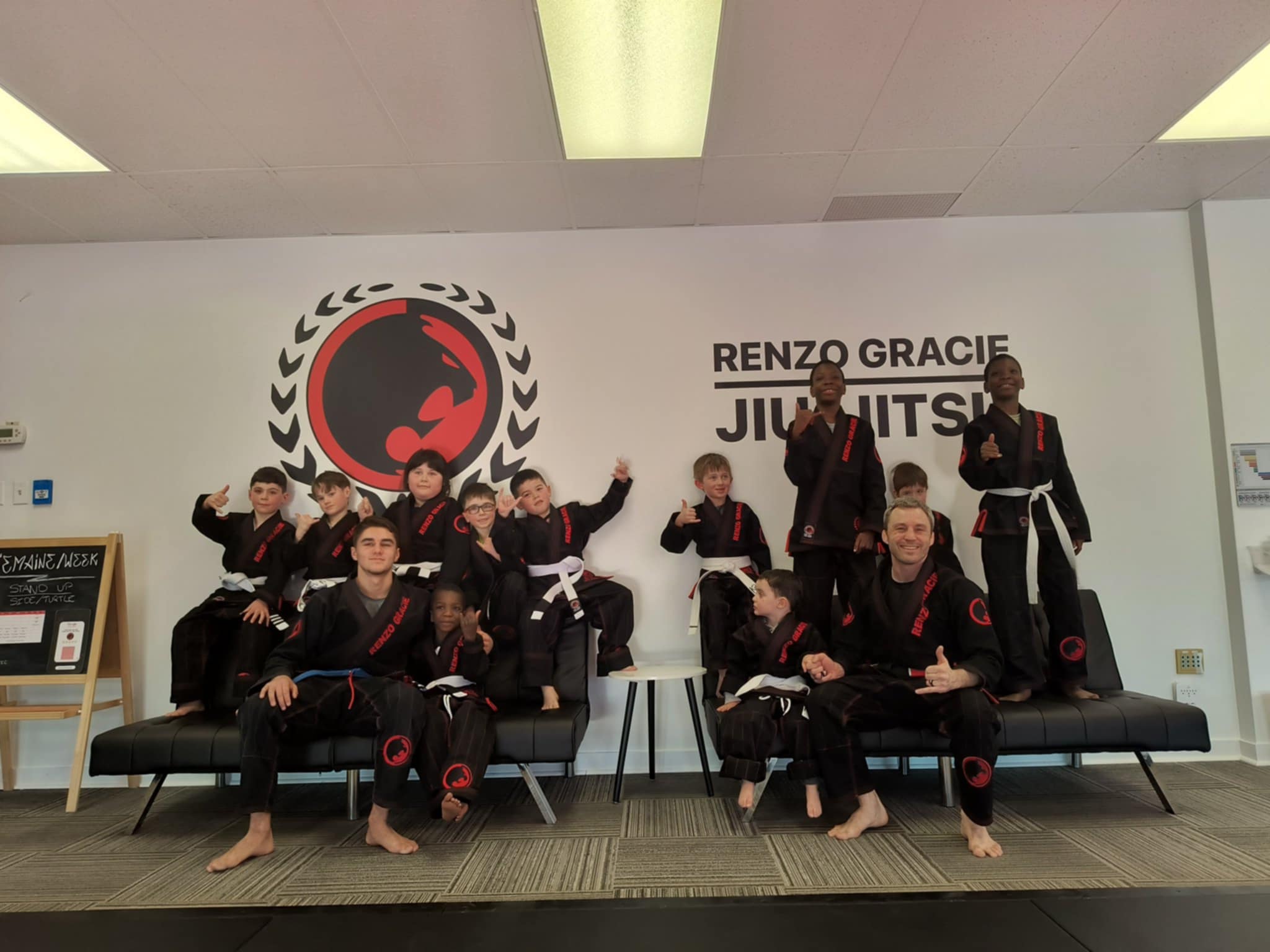
What Does the White Belt Journey Really Feel Like?
Every BJJ article about the white belt journey says the same thing: "Just keep showing up." And they're right - consistency is the only thing that matters. But that advice skips over the part nobody prepares you for: the emotional experience of being the worst person in the room, three times a week, for months.
The white belt isn't just a belt. It's a psychological test. It's the phase where your ego, your self-image, and every assumption you had about your own toughness get systematically dismantled by people half your size. Some people thrive in that. Most people almost quit.
These are the stories of Gracie Laval students who didn't quit. They're composite accounts - drawn from the experiences of real members in Laval, Quebec - because the white belt journey follows patterns so consistent that almost everyone who has earned a blue belt will see themselves in these pages.
"I Almost Didn't Walk Through the Door"
The hardest part of BJJ isn't the first submission you take. It isn't getting swept, mounted, or tapped by a teenager who weighs 40 pounds less than you. The hardest part is walking through the academy door for the first time.
"Everyone will be watching me. I'll look stupid. I'm not in shape. What if I'm the only person who doesn't know anything?"
Every one of those fears is normal. Every one is wrong.
At Gracie Laval, your first class is designed to eliminate those fears. You're greeted by name. Coach Mani or Professor LP introduces you. You're paired with an experienced partner who has one job: go easy, explain everything, make you want to come back.
A Chomedey student described his first class: "I showed up 20 minutes early because I was anxious and wanted to leave. Then someone handed me a Gi, showed me how to tie the belt, and said 'You're going to be fine.' I believed him because he said it like he'd been exactly where I was."
He had. Every upper belt had been that terrified new student. That shared memory is what makes the community so welcoming.
What Happens During Your First Month of BJJ?
The first month of BJJ is humbling in a way that nothing else in adult life prepares you for.
Think about your professional life. By the time you're 30 or 35, you've spent years developing competence. You're good at your job. You're efficient. You've forgotten what it feels like to be genuinely incompetent at something. BJJ brings that feeling back with violent clarity.
During the first month at Gracie Laval, new students experience a predictable cycle:
Week 1: Excitement mixed with confusion. You gas out after 10 minutes of rolling. You're sore in muscles you didn't know existed.
Week 2: Reality sets in. You're still getting tapped by everyone. Techniques from last week have blurred together. You start wondering if you're the worst beginner the academy has ever seen. You're not. Everyone thinks this.
Week 3: Something small clicks. You defend a position 30 seconds longer than before. You recognize an attack before it lands. That tiny pattern recognition is the first sign your brain is rewiring.
Week 4: The dropout cliff. At Gracie Laval, the coaching staff pays close attention here. A check-in from LP, encouragement from a training partner - these micro-interactions are the difference between a student who stays and one who vanishes.
The students who survive month one almost always make it to blue belt.
Why Does Your First Stripe Matter So Much?
In BJJ, white belts earn four stripes before progressing to blue belt. Each stripe represents a milestone - not just in technique, but in dedication and mat time. Your first stripe is the most emotionally significant promotion you'll ever receive in jiu-jitsu, including your eventual black belt.
Why? Because your first stripe is the first external validation that you're not wasting your time. Up until that point, progress is invisible to you. You're getting tapped less often, but you don't notice because you're still getting tapped. You're moving better, but it doesn't feel like it because everyone around you is also moving better.
Then Professor LP ties that first stripe on your belt, and something shifts.
A Vimont-based student described it: "I cried in the car afterward. I'm a 38-year-old man and I cried in a parking lot because someone put a piece of tape on my belt. It sounds ridiculous, but it wasn't about the tape. It was proof that I could still learn something new. That I wasn't too old. That showing up actually mattered."
That's not an unusual reaction. The first stripe hits differently because most adults haven't been promoted in anything since they finished school. The workplace gives you raises and titles, but those feel transactional. A stripe on a BJJ belt is earned through sweat, discomfort, and persistence. It can't be bought. It can't be faked. And everyone in the room knows exactly what it cost you.
What Is Your First BJJ Competition Really Like?
Not everyone competes. At Gracie Laval, competition is encouraged but never pressured. Some students train their entire careers without entering a tournament, and that's completely valid. But for those who step onto the competition mat, the experience is transformative.
A Fabreville student recounted her first tournament: "Thomas coached me for two months - specific scenarios, guard work, passing, submissions. I was terrified the entire week before. When my name was called, everything went blank. Then something LP always says clicked: 'Breathe. Work your game. Trust your training.' I pulled guard, swept her, won on points. I screamed so loud the entire venue looked at me. Best moment of my life outside of my kids being born."
Competition tests whether techniques work under genuine pressure, against a stranger who wants to beat you. Thomas, who has competed at the IBJJF World Championships, coaches with a simple philosophy: "You don't compete to prove you're the best. You compete to find the gaps. Then you come home and fill them."
Adults BJJ Program (14+)
Gi fundamentals, takedowns, and competition training. 5 classes per week.
Explore Adults ProgramWhy Does BJJ Progress Seem to Stop?
Somewhere between the second and third stripe, every white belt hits the plateau. Progress, which was measurable and visible during the first six months, seems to stop. You feel like you're training hard but going nowhere. This is the second most common quitting point in BJJ, and it's entirely an illusion.
What's actually happening is more complex than "you're not improving." During the plateau phase, you're absorbing information at a deeper level - integrating concepts rather than collecting techniques. Your body is developing movement patterns that will later become reflexive. The improvement is happening below the surface, like a tree growing roots before it grows branches.
At Gracie Laval, LP addresses the plateau directly: "Six months ago, that purple belt submitted you in 30 seconds. Now it takes him four minutes. You don't feel the difference. But I see it. You're getting harder to deal with."
One Laval student described the moment his plateau broke: "I was rolling with a newer white belt and realized I was doing to him what blue belts used to do to me. Controlling the pace. Choosing positions. Staying calm. Somewhere in that plateau, I'd become a completely different grappler."
What Does a Blue Belt Actually Mean?
After roughly 18 months to three years of consistent training, the blue belt arrives. It represents the transition from someone learning jiu-jitsu to someone who knows jiu-jitsu. A white belt reacts; a blue belt anticipates. A white belt survives; a blue belt starts to impose.
At Gracie Laval, blue belt promotions are ceremonies the entire academy attends. LP announces the promotion, the student receives their belt, then runs the gauntlet - rolling with every member in succession. Exhausting, emotional, and the moment the community acknowledges someone survived the white belt.
A Sainte-Rose student who received his blue belt in 2025 described it: "When LP tied that blue belt on, I looked down at it and didn't recognize myself. Two years ago, I was 40 pounds overweight, anxious about everything, and hadn't done anything physical since high school. Now I'm standing on a mat in Laval, surrounded by people who became my best friends, wearing a blue belt I earned by showing up hundreds of times when I didn't feel like it."
"My wife told me later that watching the ceremony was the first time she understood why I was gone four nights a week. She could see it on the faces of everyone in the room. This wasn't a hobby. It was something that changed who I am."
The Truth Nobody Tells You About the White Belt
The white belt is not a rank. It's a filter. No one makes you show up on a Wednesday night when you're tired, or get on the mat after being tapped 15 times. You do that yourself. That act of choosing the mat over the couch, hundreds of times, is the real promotion. The blue belt is just the acknowledgment.
At Gracie Laval in Laval, Quebec, we've watched hundreds of white belts walk through our door at 3274 Boulevard Saint-Martin Ouest. Some stay for a week. Some stay for a lifetime. The ones who stay share one trait: they decided, somewhere around month two or three, that the person they were becoming on the mat was worth more than the comfort they were giving up.
If you're reading this and you haven't started yet - your white belt journey begins the moment you book your first class. Not tomorrow. Not next month. Not when you're "in better shape."
Now.
Book your free trial class at Gracie Laval and start the journey that 151 five-star reviewers will tell you changed their lives.
"I spent six months thinking about starting BJJ and two years actually doing it. The six months of thinking were the hardest part. Everything after walking through that door at Gracie Laval was just showing up." - Julien P., Chomedey resident, Blue Belt 2025