
 EN
EN FR
FR 中文
中文 ES
ES PT
PT عربي
عربي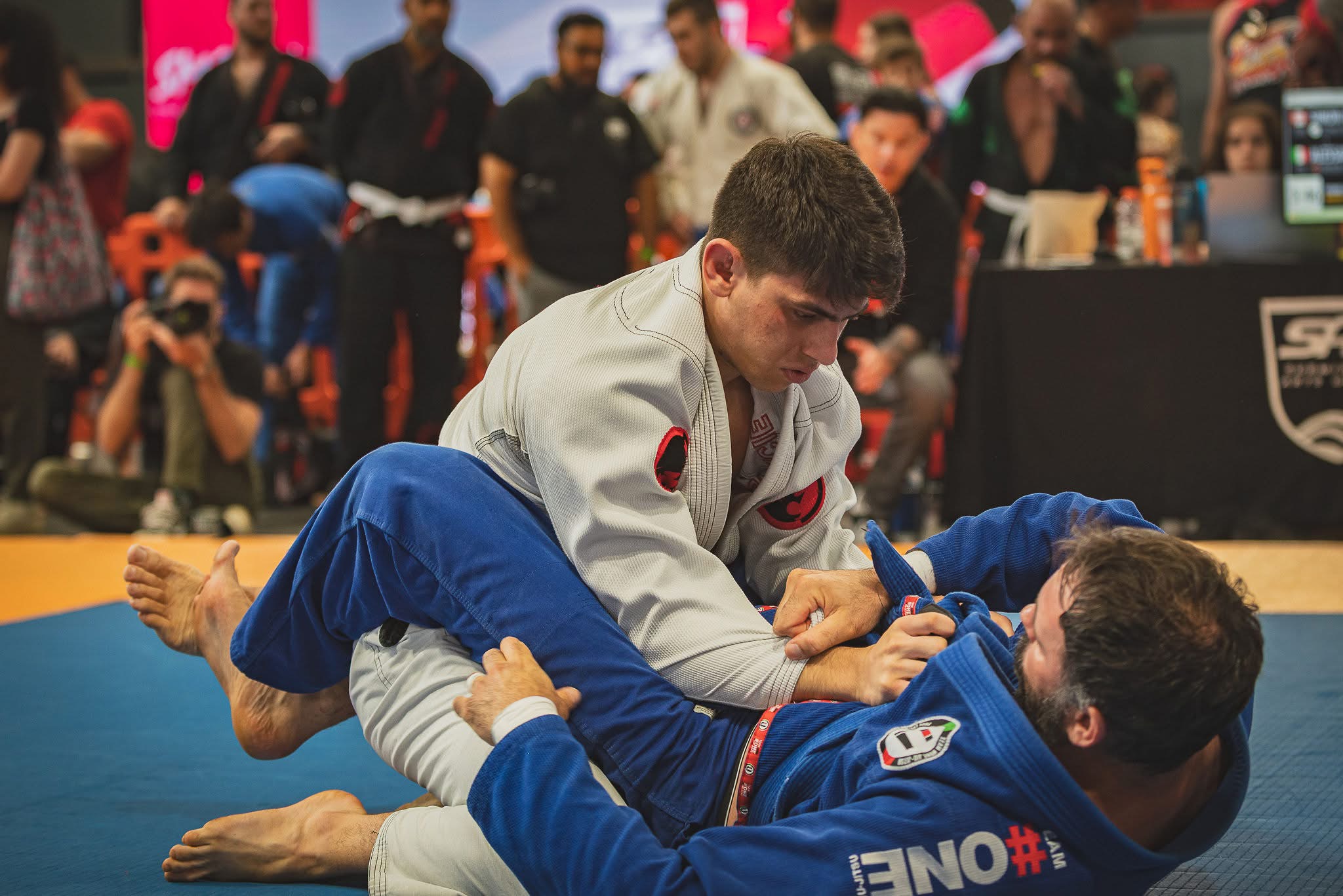
The Most Important Phase of Your BJJ Journey
The first six months of Brazilian Jiu-Jitsu are unlike any other period in your training. Everything is new. Every class introduces concepts you have never encountered before. Your body is learning to move in ways it has never moved. And somewhere around month two or three, something shifts - what felt completely foreign starts to feel like a language you are beginning to understand.
At Gracie Laval, the Fundamentals program is designed to guide you through this critical phase. Classes run Monday and Wednesday at 7:15 PM with Coach Louis-Philippe, who breaks down every concept step by step and ensures no one gets left behind.
This article covers what you will actually learn, how classes are structured, how fast you can expect to progress, and what "All Levels" really means.
What You Learn in Fundamentals
The Fundamentals curriculum is not random. It follows a structured progression that builds your knowledge from the ground up - literally.
The Four Basic Positions
Before you learn any techniques, you need to understand the positions that make up the game of BJJ. Think of these as the geography of the mat.
Guard - You are on your back with your legs controlling your opponent. Despite being on the bottom, this is an offensive position. You can sweep, submit, and control from here. Guard is where BJJ differs most from other martial arts, and it is where you will spend a lot of your early training.
Mount - You are sitting on top of your opponent's torso with your knees on either side of their body. This is a dominant position. The person on bottom is carrying your weight and has limited options. Learning to maintain mount and to escape from it are both essential skills.
Side Control - You are chest-to-chest with your opponent, controlling them from the side. This is one of the most common positions in BJJ and the one you will find yourself in frequently during rolls.
Back Control - You are behind your opponent with your hooks (legs) in and your arms in position to attack. This is the most dominant position in BJJ. The person whose back is taken has very few options.
Understanding where you are and where you want to go is the foundation of everything else. In your first six months, you will develop an instinct for recognizing these positions and knowing what your priorities are in each one.
Escapes
Good coaches teach escapes before attacks. This is not arbitrary. When you know how to escape from a bad position, you are never truly stuck. You can relax, think, and find opportunities instead of panicking.
In Fundamentals, you will learn:
- Mount escape (bridge and roll) - the classic escape that teaches you how to use your hips to reverse a dominant position
- Mount escape (elbow-knee) - creating space and recovering guard using frames and hip movement
- Side control escapes - multiple methods for creating space, framing, and recovering guard
- Headlock escape - a practical self-defense escape that translates directly to real-world situations
- Back escape - defending the choke and working to a safe position
You will drill these escapes hundreds of times over your first six months. They will become reflexive. And that reflex is what gives you confidence on the mat.
Sweeps
Sweeps are techniques that reverse the position - taking you from bottom to top. They are one of the most satisfying aspects of BJJ because they reward timing and technique over strength.
Early sweeps you will learn include:
- Scissor sweep from closed guard
- Hip bump sweep from closed guard
- Flower sweep (pendulum sweep) from closed guard
- Technical stand-up - getting back to your feet safely
These sweeps share common principles - off-balancing your opponent, controlling their posture, and using your hips to create leverage. As you learn more sweeps, you will notice these principles repeating, and each new technique will become easier to absorb.
Submissions
Submissions are the techniques that end a roll or a match. They include joint locks and chokes applied with enough control that your partner can tap before any injury occurs.
Fundamental submissions include:
- Cross-collar choke from mount and guard
- Armbar from mount and guard
- Americana (keylock) from mount and side control
- Rear naked choke from back control
- Kimura from guard and side control
- Triangle choke from guard
You will not master all of these in six months. That is not the expectation. What you will develop is an understanding of how submissions work - where the leverage comes from, how to control the position before attacking, and when to attempt a finish versus when to maintain your position.
Guard Passing
Passing the guard means getting past your opponent's legs to achieve a dominant position. It is one of the most challenging and strategically deep aspects of BJJ, and the fundamentals you learn early will serve you for your entire career.
Basic passes include:
- Knee slice pass - driving your knee through the middle of the guard
- Stack pass - using pressure to fold your opponent and create space to pass
- Torreando (bullfighter) pass - controlling the legs and moving around them
Guard passing is where many beginners first feel the strategic depth of BJJ. It is not just about physical technique - it is about reading your opponent, choosing the right moment, and committing to your pass.
How Classes Are Structured
Every Fundamentals class at Gracie Laval follows a predictable structure so you always know what to expect.
Warm-Up (10 Minutes)
Light jogging, stretching, and BJJ-specific movements. Hip escapes, forward rolls, backward rolls, and technical stand-ups. These warm-up movements are not just preparation for class - they are techniques in themselves. The hip escape you practice in warm-up is the same hip escape you use to escape from mount.
Technique Demonstration (15-20 Minutes)
Coach Louis-Philippe demonstrates the technique of the day. You will see the full technique, then a step-by-step breakdown with detailed explanations. Questions are welcome. Every technique is shown from multiple angles so you can see exactly how it works.
Drilling (15-20 Minutes)
You pair up with a partner and practice the technique repeatedly. Your partner provides cooperative resistance at first, gradually increasing as you become more comfortable. The coach walks the mat, making individual corrections and offering tips.
This is the most important part of class. Repetition is how your body learns. A technique you drill 30 times in one class will feel different than one you drill 5 times.
Live Rolling (15-20 Minutes)
Rolling is live sparring. You and a partner start from a position (or from knees) and use everything you know to gain dominant positions and submit each other. Rounds are typically 5 minutes with short breaks between.
Rolling is where everything comes together. It is also where most learning happens, because you discover what works, what does not, and where your gaps are.
As a beginner, rolling can feel overwhelming. That is normal. You will spend a lot of time in bad positions. You will get submitted frequently. This is not failure - it is learning. Every experienced student went through exactly the same thing.
Tips for early rolling:
- Tap early and often. There is zero shame in tapping. It is how you stay safe and keep training.
- Focus on survival first. Staying in a bad position for 30 seconds without getting submitted is a real achievement in your first weeks.
- Breathe. New students hold their breath constantly. Conscious breathing changes everything.
- Ask your partner for feedback. After a roll, ask what you could have done differently. Most training partners are happy to share.
How Fast You Actually Progress
This is the honest truth about progress in BJJ: it is slower than you expect and faster than you realize.
Month 1: Survival Mode
Everything is new and confusing. You are learning to move your body in unfamiliar ways. Rolls feel chaotic. You will be tired. This is the steepest part of the learning curve, and the most important thing is simply to keep showing up.
Month 2: Pattern Recognition
You start recognizing positions. When someone puts you in mount, you remember there is an escape. You might not execute it perfectly, but you know what you should be trying. This is a major shift.
Month 3: First Connections
Techniques start linking together. You escape mount and recover guard. You attempt a sweep after blocking a pass. The game starts to make sense as a connected system rather than a collection of isolated moves.
Month 4: Controlled Aggression
You begin initiating rather than just reacting. You set up submissions. You choose which guard to play. You have opinions about where you want the roll to go. Your fitness has improved dramatically, and you recover faster between rounds.
Month 5: Comfort Zone Expansion
You roll with a wider range of partners. You try new techniques in live training. You start developing preferences and beginning to form a "game" - a set of positions and techniques that suit your body and temperament.
Month 6: The Turning Point
By month six, you are no longer a complete beginner. You can hold your own against other white belts. You give experienced students more work than you used to. You understand the language of BJJ - when someone says "shrimp to recover guard," you know exactly what they mean without thinking.
This does not mean you are done learning. You are just getting started. But the foundation you have built in six months will support everything that comes after.
What "All Levels" Actually Means
You will see some classes labeled "All Levels" on the schedule. This can be confusing for beginners who wonder if they are ready for a class that also has blue, purple, and brown belts.
Here is what it means in practice:
- The technique is accessible. All Levels classes teach techniques that work for everyone. More experienced students focus on finer details while beginners focus on the basic mechanics.
- Rolling is scaled. Experienced students adjust their intensity when rolling with beginners. They use the roll to practice specific techniques rather than trying to dominate.
- The coach manages the room. Your instructor watches every pair and ensures the energy stays appropriate. If a pairing is not working, they will adjust it.
- You belong there. From day one, you are part of the team. All Levels does not mean "only for experienced students." It means exactly what it says - all levels, including yours.
Making the Most of Your First 6 Months
Here are practical tips based on years of watching beginners succeed:
- Train at least twice a week. Once a week is not enough to build momentum. Three times is ideal if your schedule allows it.
- Take notes after class. Write down the technique name and two or three key details. Reviewing these notes before your next class accelerates retention.
- Watch your training partners. You learn a tremendous amount by observing more experienced students during drilling and rolling.
- Communicate with your coach. If something is unclear, ask. If you have a physical limitation, mention it. Coach Louis-Philippe is there to help you succeed.
- Be patient with yourself. Progress in BJJ is not linear. Some weeks you will feel unstoppable. Others you will feel like you have gone backward. Both are normal. Trust the process.
Getting Started
Adult Fundamentals classes at Gracie Laval run Monday and Wednesday at 7:15 PM with Coach Louis-Philippe. Your first class is free. No experience is needed, no equipment is required - we provide a Gi for your first session.
Show up 15 minutes early, bring a water bottle, and be ready to learn. Six months from now, you will look back at this moment as one of the best decisions you ever made.