 EN
EN FR
FR 中文
中文 ES
ES PT
PT عربي
عربي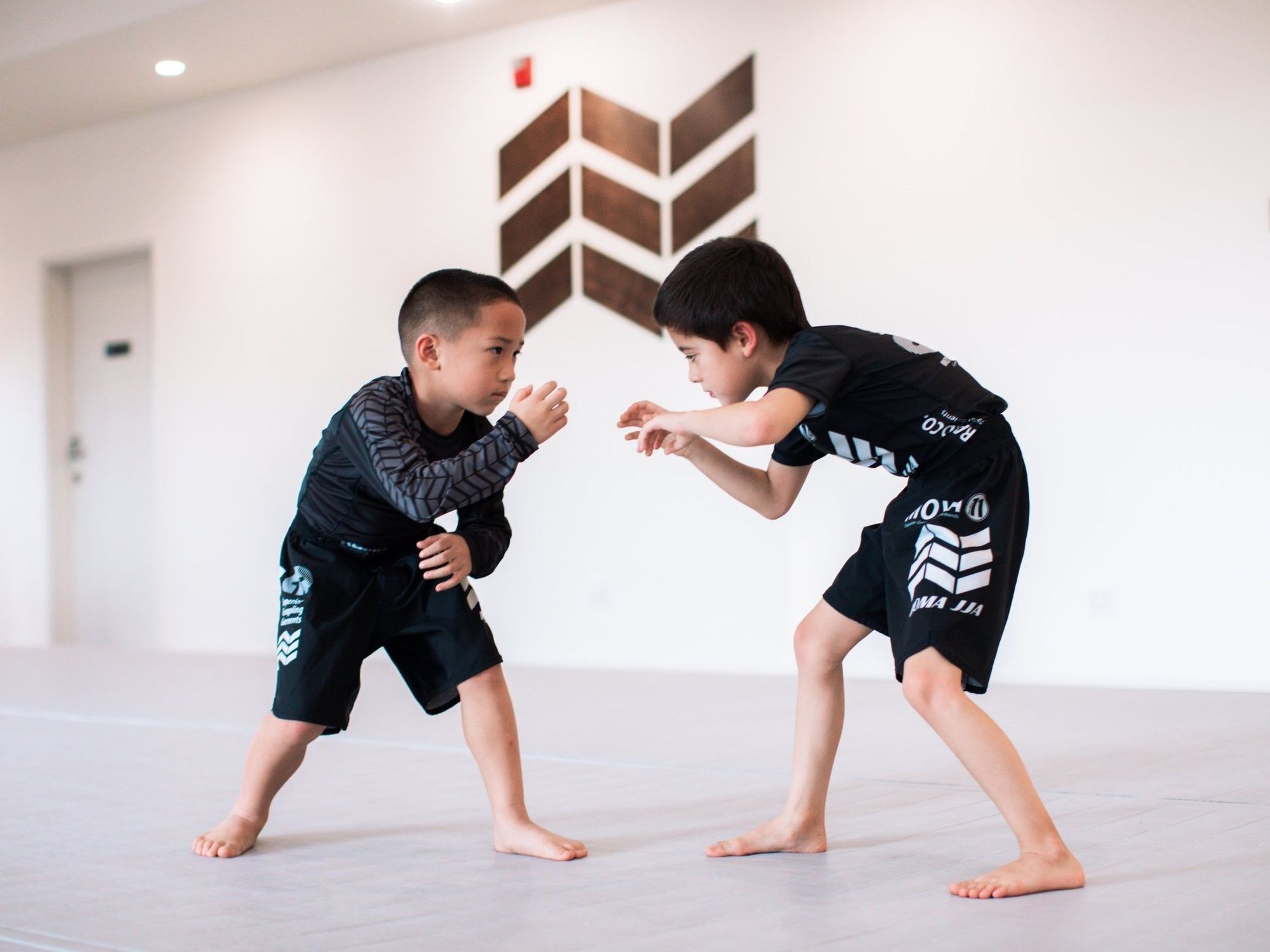
The Call No Parent Wants to Get
Your child comes home from school and something is off. They're quiet. They don't want to talk about their day. Their appetite is gone. Over the next few days, you piece it together: someone at school is targeting them.
Maybe it's physical - pushing, grabbing, tripping. Maybe it's verbal - name-calling, exclusion, humiliation in front of peers. Maybe it's both. Either way, your child is shrinking. The confidence you've been building for years is eroding, and you feel helpless.
You've told them to "tell a teacher." They did. It didn't stop.
You've told them to "walk away." They tried. The bully followed.
You've told them to "ignore it." They can't - because the fear follows them everywhere.
This is the reality for thousands of families across Laval, Montreal, and Quebec. And it's why parents increasingly turn to Brazilian Jiu-Jitsu - not to teach their kids to fight, but to give them something far more powerful: the tools to handle bullying without ever throwing a punch.
Why "Just Fight Back" Is Terrible Advice
Let's address this directly, because it's the first thing some people suggest.
Telling a bullied child to "fight back" fails for three reasons:
- Zero-tolerance school policies. In Quebec and across Canada, schools punish any child involved in a physical altercation - regardless of who started it. Your child throws one punch in self-defense and they're suspended. The bully? Also suspended. The outcome is identical, and your child has now been labeled a "fighter"
- Most bullied kids can't fight. That's part of why they're being targeted. Telling a child who is smaller, less physical, or less aggressive to "fight back" against someone who has already demonstrated they're willing to be physical is setting that child up for a worse outcome
- It doesn't address the root cause. Bullying isn't fundamentally about physical power. It's about perceived vulnerability. Bullies select targets who react with fear, who avoid eye contact, who shrink when confronted. Fighting back might end one encounter, but if the underlying dynamic doesn't change, another bully will appear
BJJ addresses the root cause. Here's how.
Kids BJJ Program (Ages 3-13)
Apprentice, Junior, and Teens classes. First class free.
Explore Kids ProgramThe Four Anti-Bullying Skills BJJ Builds
1. Confidence That Changes Body Language
This is the most important and least obvious benefit. Psychologists who study bullying consistently find that target selection is based on nonverbal signals. Bullies - even young ones - are remarkably skilled at reading body language. They look for:
- Hunched shoulders
- Averted eye contact
- Hesitant, shuffling movement
- A voice that goes quiet under pressure
- Flinching or freezing when someone enters their space
A child who trains BJJ develops the opposite signals - not because someone told them to stand tall, but because they've internalized it through physical experience.
When your child has spent hundreds of hours on the mat - being put in uncomfortable positions and finding their way out, facing bigger partners and staying calm, handling pressure and recovering - their body reflects that experience. They stand differently. They make eye contact naturally. They don't flinch when someone moves toward them quickly.
Bullies read this instantly. The child who trained BJJ is no longer broadcasting "I'm an easy target." The bullying often stops before any physical encounter happens - because the bully has moved on to someone who still broadcasts vulnerability.
"My daughter was being excluded and pushed around at recess for months. After three months of BJJ, her teacher told us something changed - the other kids started including her, and the girl who was bullying her simply stopped. Nothing dramatic happened. Her presence just shifted." - Parent, Gracie Laval
2. De-Escalation Through Calm
Here's what happens inside a bullied child's body when they're confronted: their heart rate spikes, their breathing gets shallow, their muscles tense, and their brain shifts into fight-or-flight mode. In this state, clear thinking is impossible. They freeze, they cry, or they lash out - and all three responses reward the bully.
BJJ trains your child to stay calm under physical pressure. Every single class, they practice being in positions that trigger the stress response - pinned under someone, caught in a hold, pressured by a partner - and they learn to breathe, think, and respond methodically.
Over time, this becomes neurological. The stress response that used to overwhelm them gets managed. Their heart rate still elevates, but they don't panic. They don't freeze. They think.
When a bully gets in their face at school, a BJJ-trained child's internal experience is fundamentally different from an untrained child's. Where the untrained child feels terror, the BJJ-trained child feels discomfort they've practiced handling. That's the difference between a child who crumbles and a child who stands firm.
This calm isn't bravery in the Hollywood sense. It's trained composure - the product of hundreds of repetitions in a safe environment.
3. Physical Capability Without Striking
There are situations where de-escalation and body language aren't enough. A bully grabs your child. Pushes them. Pins them against a wall. In these moments, your child needs physical tools - but the right kind of tools.
BJJ is uniquely suited for anti-bullying self-defense because:
It's entirely grappling-based. No punches. No kicks. Your child learns to control a situation through holds, pins, and leverage. If someone grabs them, they know how to break the grip. If someone tackles them, they know how to control the position from the ground. If someone pins them, they know how to escape.
Control without injury. This is the critical distinction. A BJJ-trained child can neutralize an aggressor without hurting them. They can hold a bully in place until an adult arrives. They can escape a grab and create distance. The techniques are designed for restraint, not retaliation.
This matters for school policies. When the inevitable review happens, there's a world of difference between "your child punched the other student" and "your child held the other student's arm until the teacher arrived." One is assault. The other is self-defense.
At Gracie Laval, our kids' curriculum specifically includes anti-bullying scenarios - realistic situations (someone grabs your collar, someone pushes you against the wall, someone takes you to the ground) with practiced, proportionate responses.
4. Assertiveness Without Aggression
There's a spectrum between passive and aggressive, and most bullied kids are stuck at the passive end. They don't speak up. They don't set boundaries. They don't say "stop" with conviction. And the programs that teach verbal assertiveness - "just say no firmly" - rarely work, because verbal assertiveness without physical confidence behind it is unconvincing to everyone, including the child saying it.
BJJ builds the foundation that makes verbal assertiveness authentic.
A child who knows - truly knows, in their bones - that they can handle a physical confrontation if it escalates doesn't need to prove anything. They can say "stop" and mean it. They can walk away without it feeling like retreat. They can report to a teacher without feeling weak.
This is what psychologists call assertiveness grounded in competence. It's not bluffing. It's not scripted. It's a child who has genuine capability and chooses to handle the situation peacefully - because they can afford to.
Spring Semester: When Bullying Often Peaks
Child psychologists and school counselors across Quebec report that bullying intensifies during the spring semester. By April, social hierarchies that formed in September have solidified. Kids who have been targets all year are at their most vulnerable. The stress of approaching end-of-year exams adds pressure, and warmer weather means more unstructured outdoor time where supervision is thinner.
If your child is being bullied - or if you want to prevent it before it starts - spring is the most strategically important time to begin training. The skills they develop over April, May, and June will carry them through the summer and into the next school year as a fundamentally different person.
What the Research Says
The connection between martial arts training and reduced bullying isn't anecdotal. Published research supports it:
- A study in the Journal of Physical Education and Sport found that children who practice grappling-based martial arts show significantly lower rates of being bullied compared to peers
- Research on martial arts and child psychology published in Aggression and Violent Behavior found that structured martial arts training reduces aggressive behavior in children while simultaneously increasing assertiveness and self-regulation
- Pediatric psychologists increasingly recommend grappling arts as a complementary intervention for children who experience chronic bullying, noting that the combination of physical competence and emotional regulation produces better outcomes than talk therapy alone for many children
The evidence is clear: BJJ doesn't make kids more violent. It makes them less likely to be targeted and more capable of handling conflict peacefully.
What Parents at Gracie Laval Have Seen
Over 151 families in Laval and the greater Montreal area - from Chomedey, Fabreville, Sainte-Rose, Vimont, and Duvernay - have enrolled their children at Gracie Laval. The bullying-related transformations are among the most consistent results parents report:
- Children who were afraid of school are attending confidently
- Kids who had no friends at school found their first real friendships on the mat
- Parents who were considering changing schools found that the problem resolved itself - not because the bully changed, but because their child changed
"We were seriously considering switching schools. His anxiety was so bad he was getting stomachaches every morning. After two months of BJJ, the stomachaches stopped. After four months, he told us he didn't want to switch schools anymore. The bully hadn't changed. Our son had." - Parent, Gracie Laval
Kids BJJ Program (Ages 3-13)
Apprentice, Junior, and Teens classes. First class free.
Explore Kids ProgramThe Approach That Works: Not Fighting - Becoming Unfightable
The goal of BJJ for anti-bullying isn't to create little fighters. It's to create children who are so confident, so calm, and so physically capable that fighting becomes unnecessary.
A child who can handle pressure doesn't provoke confrontation - they prevent it. A child who knows they can control a situation doesn't need to prove it. A child who has earned real confidence through effort doesn't need to take it from someone else.
This is what we teach at Gracie Laval. Not violence. Not aggression. Not retaliation.
Composure. Capability. Confidence that makes conflict unnecessary.
Your Child's First Class Is Free
If your child is dealing with bullying - or if you want to build their resilience before it happens - we invite you to bring them in for a free trial class.
They'll work with a partner their size, learn a basic technique, play warm-up games, and experience what it feels like to be in an environment where every child is respected, challenged, and supported.
No commitment. No contract. No obligation.
Book a free trial class or contact us at coach@gracielaval.com or (438) 533-4348.
We're at 3274 Blvd. Saint-Martin O, Suite 201, Laval - free parking, easy highway access, and a safe space where your child can start becoming the person bullies don't target.