 EN
EN FR
FR 中文
中文 ES
ES PT
PT عربي
عربي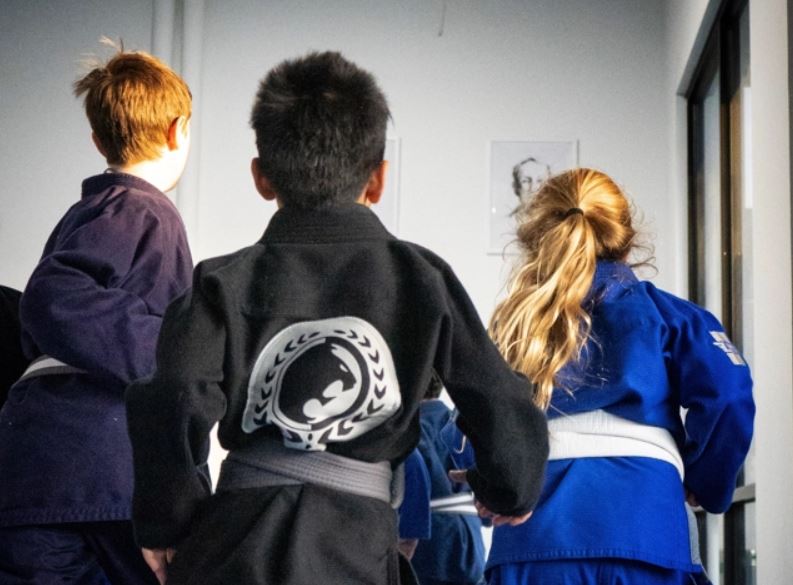
Is Your Child Mature Enough for Martial Arts?
Your kid can't sit still at dinner. Or the opposite - they're so quiet you worry about them. They melt down over small frustrations, or they let other kids walk all over them. And now someone suggested martial arts and a new worry landed in your lap: "But is my child actually ready for that?"
You're picturing flying kicks and screaming. You're imagining your 4-year-old in tears. You're afraid of signing up, paying, and watching it fall apart by week two.
Here's the short answer: if your child is between 3 and 13, they are almost certainly ready. The longer answer - which matters more - is that "ready" doesn't mean what you think it means. The traits you're worried about? They're usually the exact reasons to start.
What "Ready" Actually Means
Most parents assume their child needs to meet certain benchmarks before starting martial arts:
- "They need to be able to sit still and listen"
- "They need to be coordinated enough"
- "They should be less shy first"
- "They need to be tougher"
Here's the truth: those are the things martial arts teaches. Waiting for your child to develop focus, coordination, confidence, and resilience before starting the activity that develops those exact qualities is circular reasoning.
You wouldn't wait for your child to know how to swim before enrolling them in swimming lessons. The same logic applies here.
The only real prerequisites for martial arts are:
- Your child can separate from you for 45 minutes (even if reluctantly at first)
- They can follow basic instructions like "stand here" and "wait your turn" (even imperfectly)
- You, the parent, are willing to be patient through the first 3-4 classes while they adjust
That's it. Everything else - attention span, coordination, social comfort, physical ability - develops on the mat.
Kids BJJ Program (Ages 3-13)
Apprentice, Junior, and Teens classes. First class free.
Explore Kids ProgramCan 3-Year-Olds Start Jiu-Jitsu?
This is where it starts, and it's where parents have the most doubt.
"My three-year-old can barely sit still for dinner. How can they handle a martial arts class?"
They can, because the class is designed for exactly that developmental stage. At Gracie Laval, our Apprentice program for ages 3-4 doesn't look like an adult martial arts class scaled down. It's an entirely different approach:
What a typical Apprentice class includes:
- Movement games that build coordination, balance, and body awareness
- "Animal walks" - bear crawls, crab walks, frog jumps - that develop strength without the child realizing it
- Basic mat etiquette - bowing on, waiting your turn, saying "yes, coach"
- Partner activities that build comfort with physical contact and sharing space
- Short attention bursts - activities change every 3-5 minutes to match a young child's natural rhythm
What it does NOT include:
- Long explanations or complex techniques
- Anything that requires sustained focused sitting
- Sparring or physical confrontation
- Pressure to perform or compete
Signs Your 3-4 Year Old Is Ready
- They can be away from you in a group setting (daycare, preschool, a friend's house)
- They sometimes follow instructions - even if not consistently
- They show interest in physical play - wrestling, tumbling, climbing
- They mimic movements they see (TV characters, older siblings)
Signs They Might Need Another 6 Months
- Severe separation anxiety that hasn't improved in other group settings
- They are not yet verbal enough to communicate basic needs
- They show distress - not just hesitation - in new physical environments
Key insight: hesitation is normal. Many 3-year-olds cry during their first class. Most are laughing by the third. The adjustment period is real, and patient parents see the best results.
"Our son started at 3.5. The first class he clung to my leg and cried. By the third class he was doing bear crawls and giggling. He's now 5 and hasn't missed a week." - Parent, Gracie Laval
What Age Is Best to Start BJJ?
This is the age range where the transformation happens fastest. Children ages 5-8 are developmentally primed for exactly what BJJ teaches: structured learning, following sequences, working with partners, and responding to a progression system.
What Junior classes look like:
- Warm-up drills that build agility, coordination, and fitness
- Technique instruction - real BJJ fundamentals like guard positions, mount escapes, and basic submissions
- Partner drilling where kids practice techniques with someone their size
- Light, supervised sparring introduced gradually
- The stripe system begins - visible markers of progress on their belt
Why This Age Group Thrives
At this stage, your child's brain is building the executive function skills - focus, impulse control, planning - that will define their academic and social success. BJJ accelerates this development because it demands all three simultaneously:
- Focus: They must watch, listen, and replicate techniques accurately
- Impulse control: They must wait their turn, respect their partner's boundaries, and follow class rules
- Planning: They begin to think strategically - "if they do this, I do that"
Children who start BJJ at 5-8 often show noticeable behavioral improvements within the first 2-3 months. Teachers notice. Parents at pickup notice. The child notices it in themselves.
Common Concerns at This Age
"My child is shy." Perfect. BJJ creates structured social interaction - working with a partner on a specific task - which is far less intimidating than the unstructured chaos of a playground. Shy kids often find their first real friendships on the mat.
"My child is hyperactive." Even better. A 45-minute BJJ class channels that energy productively. The physical intensity matches what their body needs, and the structured format teaches their brain to regulate. Parents of children with ADHD frequently report that BJJ works when other activities haven't.
"My child doesn't like sports." BJJ isn't a sport in the traditional sense. There are no teams, no benches, no games where your child can be picked last. It's an individual pursuit practiced in a group - which appeals to many kids who don't fit the "sporty" profile.
Do Older Kids Progress Faster in BJJ?
By age 9, your child is ready for serious technical development. The Teen program at Gracie Laval represents a significant step up in complexity, physical intensity, and personal responsibility.
What Teen classes include:
- Advanced techniques - guard passes, sweeps, chokes, and submission chains
- Live rolling (sparring) - real, dynamic grappling with partners at their level
- Competition preparation for students who are interested (always optional)
- Belt progression toward the colored belt ranks - a source of deep personal pride
- Training alongside adult beginners, which accelerates development
The Anti-Bullying Age
Ages 9-13 are the peak years for schoolyard bullying and social conflict. This is when social hierarchies harden, peer pressure intensifies, and kids who lack confidence become visible targets.
BJJ at this age provides:
- Physical self-defense capability - the ability to control a situation without striking
- Unshakable body language - posture, eye contact, and composure that signal "not a target"
- A peer group outside school - training partners who respect them for effort and character, not social status
For many teens, the BJJ academy becomes their anchor. It's the place where they feel competent, respected, and genuinely challenged - especially if school doesn't provide that.
Read more about how BJJ addresses bullying
"My Child Tried Another Martial Art and Didn't Like It"
This is more common than you'd think, and it almost never means your child doesn't like martial arts. It usually means the specific style or school wasn't the right fit.
Striking arts (karate, taekwondo) can be intimidating for kids who don't want to punch or be punched. BJJ has no striking whatsoever - everything is grappling-based, which feels more like wrestling or play-fighting than combat.
Large class sizes at some academies mean your child got lost in the crowd. At Gracie Laval, we maintain a strict student-to-instructor ratio to ensure every child receives individual attention.
Rigid, military-style instruction turns off many kids. Our coaching approach is firm but warm - structure with encouragement, discipline with fun.
If your child tried martial arts before and it didn't click, BJJ at a quality academy is worth a second chance.
How Do You Know Your Child Is Ready?
Here's exactly what happens when you bring your child to their first class at Gracie Laval:
- Arrive 10-15 minutes early. You'll meet the instructor, tour the facility, and your child will get comfortable with the space
- Your child joins the class. They'll follow along at their own pace. Nobody expects perfection on day one
- Warm-up games. The class starts with movement - not lecturing. Your child is having fun before they realize they're training
- Technique practice. They'll learn one or two basic movements and practice with a partner their size
- End of class. High fives, bowing off the mat, and - in most cases - your child turning to you and saying "can we come back?"
You're welcome to watch the entire class. We have a viewing area for parents. Seeing your child on the mat is the best way to judge whether this is the right fit.
Families Across Laval Trust Gracie Laval
Over 151 families from Chomedey, Fabreville, Sainte-Rose, Vimont, Duvernay, and the greater Montreal area have enrolled their children at Gracie Laval - and rated us 5 stars on Google.
They didn't choose us because of marketing. They chose us because they saw real changes in their kids: better focus, calmer temperament, real confidence, genuine enthusiasm for an activity that builds them into stronger people.
The Free Trial Removes All Risk
You don't need to commit. You don't need to buy equipment. You don't even need to decide today.
Your child's first class is completely free. If they love it, we'll talk about programs. If they need time, that's fine too. There's no sales pressure, no contract requirement, and no awkward follow-up calls.
Book a free trial class or contact us at coach@gracielaval.com or (438) 533-4348.
We're at 3274 Blvd. Saint-Martin O, Suite 201, Laval - free parking, right off the highway, easy access from anywhere in Laval or the Montreal North Shore.
Your child doesn't need to be "ready" in some abstract sense. They just need a first class. The readiness builds from there.