
 EN
EN FR
FR 中文
中文 ES
ES PT
PT عربي
عربي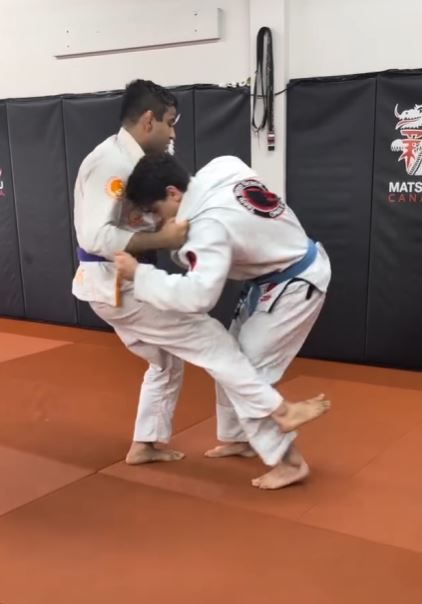
Why Does the Gym Stop Working for Fitness?
You've been going to the gym. Maybe consistently, maybe in bursts. You know the routine - treadmill, machines, maybe some free weights if you're feeling adventurous. You've watched the same motivational clips, tried the same programs, tracked the same numbers.
And somewhere around 35, a quiet realization settles in: this isn't working anymore. Not because your body is broken - because your brain is bored.
The workouts that once felt challenging now feel mechanical. The results that once came quickly have flatlined. The gym membership that was supposed to be your fitness solution has become a monthly charge you occasionally justify by going three times in a week before disappearing for two.
This isn't a willpower problem. It's a design problem. Traditional gym workouts weren't built for the way adults actually stay motivated over years. They were built for short-term results and revolving-door memberships.
Brazilian Jiu-Jitsu solves the design problem. It delivers fitness results that rival or exceed anything you'll get from a gym - at any age - while keeping your brain so engaged that quitting never crosses your mind.
How Does BJJ Build Better Strength Than Weights?
Let's be specific, because "good workout" means nothing. Here's what happens physiologically when you train jiu-jitsu consistently.
Cardiovascular Conditioning
A typical one-hour BJJ class alternates between technique drilling (moderate intensity) and live rolling (high intensity). This is effectively high-intensity interval training (HIIT) - the format that decades of research have confirmed is the most efficient for cardiovascular improvement.
During a five-minute roll, your heart rate sits between 150-180 BPM. During technique breaks, it drops to 110-130. This push-pull pattern is exactly what strengthens your heart, improves your VO2 max, and builds the kind of cardiovascular base that translates to every other physical activity in your life.
Research has shown that BJJ practitioners develop cardiovascular fitness markers comparable to other endurance athletes - despite most practitioners not doing any additional cardio training.
You're getting elite-level cardio without ever setting foot on a treadmill.
Functional Strength
Here's where BJJ separates itself from every gym routine you've ever tried.
In the gym, you train muscles in isolation. Bicep curls. Leg press. Lat pulldowns. Each exercise targets a specific muscle group through a fixed range of motion. The result is strength that exists in the gym and rarely translates to real life.
In BJJ, every movement is compound, multi-directional, and loaded with your training partner's body weight. You're pushing, pulling, rotating, bridging, gripping, and stabilizing - often all in the same five-second sequence.
The specific strength adaptations include:
- Grip strength - consistently rated as one of the strongest predictors of longevity and overall health. BJJ develops grip strength that no gym exercise matches
- Posterior chain - your back, glutes, and hamstrings get constant work from bridging, hip escaping, and guard retention
- Core stability - not crunches and planks, but true rotational core strength under unpredictable loads
- Pulling strength - the most underdeveloped movement pattern in gym-goers. BJJ makes it primary
- Hip mobility under load - guard work develops hip strength and flexibility simultaneously
The result is a body that doesn't just look fit - it moves like it's fit. You can pick up your kids without thinking about your back. You can carry groceries up three flights of stairs without getting winded. You can shovel snow for an hour and feel fine the next day.
This is what "functional fitness" actually means. Not balance-board exercises in a group class. Real, load-bearing, multi-planar movement that your body was designed to do.
Adults BJJ Program (14+)
Gi fundamentals, takedowns, and competition training. 5 classes per week.
Explore Adults ProgramCan You Start Jiu-Jitsu in Your 30s, 40s, or 50s?
The fitness industry sells the idea that your body starts declining at 30 and it's all downhill from there. This is a half-truth at best and a marketing tactic at worst.
Here's what actually changes with age, and why BJJ is uniquely positioned to address it.
In Your 30s: The Wake-Up Call
What's happening: Your metabolism is slowing. You can no longer eat whatever you want and stay lean. Recovery takes slightly longer than it did at 22. You're busier than ever - career, relationships, maybe kids - and your fitness has slipped to the bottom of the priority list.
What BJJ provides: A training system so engaging that it climbs back up the priority list on its own. At Gracie Laval, our 30-something members consistently say the same thing: "I never skip BJJ. I skipped the gym all the time."
The physical demands of BJJ in your 30s are perfectly matched to your capacity. You have enough athleticism to handle the workload, enough maturity to train smart, and enough life experience to appreciate the mental benefits. Many competitors don't hit their peak until their mid-30s.
In Your 40s: The Reinvention
What's happening: Muscle mass begins declining at roughly 3-5% per decade if you're not actively countering it (sarcopenia). Joint stiffness increases. You've probably accumulated a few injuries from years of... life. The gym feels increasingly pointless.
What BJJ provides: A resistance training stimulus that fights sarcopenia without the joint stress of heavy weightlifting. BJJ loads your body through natural movement patterns that your joints can tolerate indefinitely, while providing enough resistance (your training partner) to maintain and even build muscle mass.
Research on martial arts practitioners over 40 has found that they tend to maintain muscle mass and bone density at levels higher than sedentary peers.
"I'm 46. I'm in better shape than I was at 30, and I'm not exaggerating. My doctor actually asked me what I changed. I said 'I started jiu-jitsu.' He looked at me like I was joking." - Robert P., Gracie Laval member
In Your 50s and Beyond: The Longevity Investment
What's happening: Balance deterioration, reduced proprioception, accelerated muscle loss, and increased fall risk become real concerns. The fitness industry largely ignores this demographic, offering either gentle group classes that don't challenge you or programs designed for 25-year-olds that will hurt you.
What BJJ provides: Balance training that no other activity can replicate. Every moment of BJJ involves managing weight distribution - yours and your partner's - through constantly shifting positions. This builds the proprioceptive capacity and reactive balance that directly reduces fall risk.
The grip strength development is equally critical. Research published in The Lancet identified grip strength as the single strongest predictor of all-cause mortality - more predictive than blood pressure. BJJ develops grip strength as a fundamental requirement of practice, not as an afterthought.
At Gracie Laval, members over 50 train alongside everyone else. They modify intensity as needed, focus on technique over athleticism, and consistently report that BJJ keeps them feeling decades younger than their age.
BJJ vs. The Gym: An Honest Comparison
Let's put them side by side.
Calories Burned
- Gym (weight training): 200-400 calories per hour
- Gym (treadmill): 400-600 calories per hour
- BJJ class: 500-900 calories per hour (depending on intensity)
BJJ wins - but this isn't the important number. The important number is calories burned over a year, which depends entirely on whether you keep showing up.
Retention Rate
This is where the comparison becomes unfair.
The fitness industry's average retention rate is dismal - most gyms report that 80% of January sign-ups quit within five months. The treadmill gathers dust. The dumbbells collect dust.
BJJ has notoriously high dropout rates - most academies see the majority of white belts leave within the first year. But those who stay past the first six months tend to stay for years. Why? Because you're not just exercising - you're learning a skill, building relationships, and progressing through a visible ranking system.
The best workout is the one you actually do. If BJJ keeps you training three times a week for five years while the gym keeps you training three times a week for three months, the long-term fitness outcomes aren't even comparable.
Body Composition
Traditional gym splits (chest day, leg day, arm day) are designed to build hypertrophy - bigger muscles in isolated groups. If your goal is bodybuilding aesthetics, the gym is the right tool.
If your goal is a lean, functional, proportionally developed body, BJJ delivers a different kind of transformation:
- Reduced body fat through sustained high-intensity work
- Lean muscle development across the entire body, not just mirror muscles
- Proportional strength - no imbalances between push and pull, anterior and posterior
- Visible core development from constant rotational demands
The "BJJ body" isn't a bodybuilder's physique. It's a functional athlete's physique - and for most adults over 30, that's exactly the look and feel they actually want.
Injury Risk
BJJ's injury rate is lower than many other combat sports like judo, MMA, and wrestling - particularly when you account for the controlled nature of training and the ability to tap.
The key is that BJJ has a built-in safety mechanism: the tap. The moment anything feels wrong, you tap, your partner releases, and you're fine. There's no equivalent in the gym when you're under a heavy squat or at mile 18 of a run.
For adults over 40, this controllability is enormous. You manage your own risk every single session.
Real Transformations, Real People
Theory is fine. Results are better.
The Desk Worker Reset
Profile: 38-year-old software developer. Sedentary job, chronic back pain, 25 pounds overweight. Had tried and quit the gym four times.
After 8 months of BJJ: Lost 18 pounds. Back pain resolved (strengthened posterior chain). Visible muscle definition for the first time since university. Trains three times per week and hasn't missed a week in four months.
The mechanism: BJJ directly counteracts the damage of desk work. The hip mobility from guard play reverses the hip flexor tightness from sitting. The pulling movements counteract the forward-shoulder posture of computer work. The cardiovascular demand burns fat. And the mental engagement means he never wants to skip.
The Former Athlete
Profile: 44-year-old former hockey player. Knees from years of ice time. Missed the competitive element of sport but couldn't play hockey anymore.
After 12 months of BJJ: Cardiovascular fitness back to his hockey-playing levels. Joint pain actually decreased (low-impact loading strengthened supporting muscles). Competes in masters-division BJJ tournaments. Found the competitive outlet he'd been missing for a decade.
The Late Starter
Profile: 52-year-old retiree. Never did martial arts. Wife convinced him to try after reading about starting BJJ at 35+.
After 6 months of BJJ: Blood pressure dropped from borderline hypertensive to normal range. Lost 12 pounds. Sleeps better than he has in 20 years. Training partner is 28 years old. Neither of them cares.
Adults BJJ Program (14+)
Gi fundamentals, takedowns, and competition training. 5 classes per week.
Explore Adults ProgramDoes BJJ Improve Mental Fitness Too?
Every article about "BJJ fitness" focuses on the body. Here's what they miss: the mental fitness gains may matter more, especially as you age.
Cognitive Sharpness
BJJ is essentially a physical chess match. Every position presents a problem. Every technique is a solution. Your brain is processing, strategizing, adapting, and learning - for the entire class.
Research on cognitively demanding physical activities shows that they produce superior neuroplasticity and cognitive preservation compared to repetitive exercise. In plain language: BJJ keeps your brain sharper as you age than running on a treadmill does.
Stress Inoculation
As explored in our article on BJJ and mental health, regularly facing controlled adversity literally rewires your stress response. You become calmer under pressure - not just on the mat, but at work, in traffic, in difficult conversations.
Sleep Quality
Multiple studies confirm that high-intensity exercise performed in the evening improves sleep onset latency and sleep quality. Anecdotally, nearly every BJJ practitioner over 40 reports the same thing: "I sleep like I'm 20 again."
For adults dealing with age-related sleep deterioration, this alone is worth the training.
Getting Started at Any Age in Laval
If you're in Laval, Montreal, or anywhere on the North Shore, Gracie Laval is built for exactly this - adults who want to transform their fitness through something more meaningful than a gym membership.
What to expect your first week:
- You'll learn basic positions and movements at a pace that respects your current fitness level
- Professor Louis-Philippe and the coaching team will assess where you are and help you scale appropriately
- You'll be sore - embrace it. It means your body is adapting
- You'll be confused - that's normal. Everyone is confused for the first month
- You'll leave thinking "I want to come back" - that's the design working
Class schedule for adults:
- Monday through Thursday at 7:15 PM
- Saturday at 10:45 AM
- Start with two classes per week and increase as your body adapts
Your first class is free. No contract, no commitment, no catch. Just show up, train, and see what your body is actually capable of - at any age.
3274 Blvd. Saint-Martin O, Suite 201, Laval, Quebec. Free parking. A community that's been waiting for you.
The gym will always be there. But the version of yourself that BJJ builds? That's worth starting today.