 EN
EN FR
FR 中文
中文 ES
ES PT
PT عربي
عربي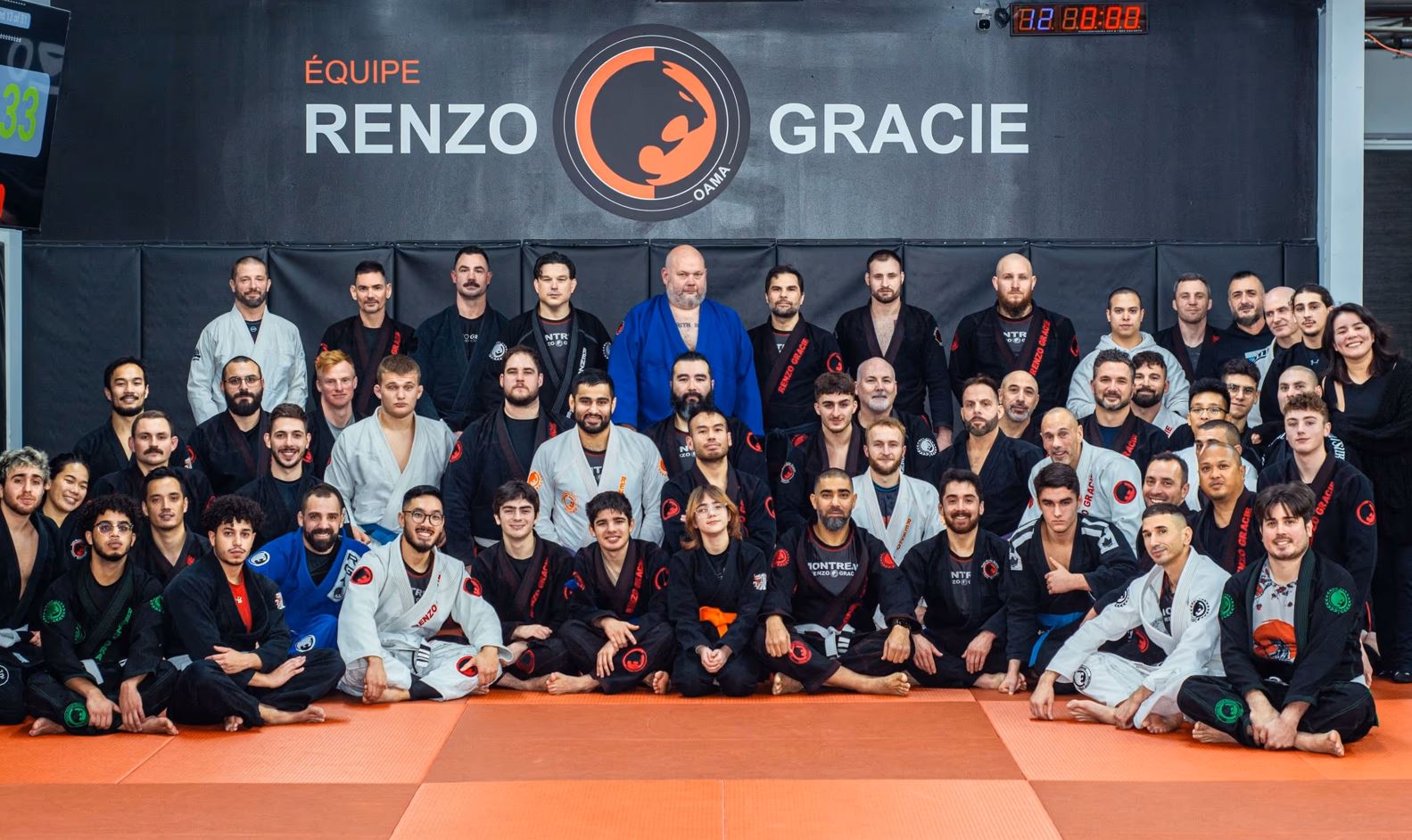
Can Martial Arts Help with Anxiety and Depression?
You know the feeling. The tightness in your chest at 2 a.m. The fog that makes simple decisions feel impossible. The Sunday dread that starts on Friday. You've tried the advice - deep breaths, journaling, the meditation app you downloaded and opened twice.
Your doctor said "exercise." So you dragged yourself to the gym. Thirty minutes on a treadmill, staring at a screen, alone with the exact thoughts you were trying to escape. It helped a little. It wasn't enough.
Here's what nobody told you: not all exercise is equal for your brain. The research on martial arts and mental health - specifically Brazilian Jiu-Jitsu - shows mechanisms that a treadmill cannot replicate. This isn't medical advice. But it might be the missing piece between coping and actually feeling better.
What Brain Changes Does BJJ Create?
When you train martial arts, your brain undergoes a specific cascade of neurochemical events that directly counteract the biology of anxiety and depression.
Cortisol Regulation
Cortisol is the stress hormone. In healthy function, it rises in the morning to wake you up and drops in the evening to help you sleep. In chronic stress, anxiety, and depression, cortisol regulation breaks down - it stays elevated, disrupts sleep, impairs immune function, and feeds the cycle of mental health deterioration.
Research on cortisol levels in martial arts practitioners versus sedentary controls has shown significant results: regular martial arts training is associated with lower resting cortisol levels and faster cortisol recovery after acute stress. This means practitioners not only have lower baseline stress, but their bodies are better at returning to calm after being stressed.
The mechanism is dose-dependent - training 2-3 times per week produced measurable results within 8 weeks.
Endorphin and Endocannabinoid Release
High-intensity physical activity triggers the release of endorphins (your body's natural painkillers) and endocannabinoids (the same class of compounds that make cannabis work, produced naturally by your brain).
What makes martial arts different from a jog is the intensity pattern. BJJ alternates between explosive bursts and active recovery - a pattern that research shows produces a more robust endorphin response than steady-state cardio. Research suggests that high-intensity interval training patterns can trigger enhanced neurochemical responses compared to moderate-intensity continuous exercise.
In practical terms: the "BJJ high" that practitioners describe after class is a real, measurable neurochemical state. It's not placebo. It's not wishful thinking. It's your brain's own pharmacy, activated by the specific demands of training.
Norepinephrine and Serotonin
Exercise broadly increases norepinephrine and serotonin - the two neurotransmitters most directly implicated in depression. SSRIs (the most common antidepressant medication) work by increasing serotonin availability. Exercise achieves a similar effect through a different mechanism, and martial arts appear to be particularly effective due to their combination of physical intensity, cognitive demand, and social interaction.
Research has shown that regular exercise can be as effective as medication for mild to moderate depression, with martial arts being among the more engaging forms of exercise for sustained practice.
Important caveat: This doesn't mean martial arts replace medication. For many people, medication is essential and life-saving. But exercise - particularly martial arts - can be a powerful adjunct, and for some people, a sufficient intervention on its own. Work with your healthcare provider.
Adults BJJ Program (14+)
Gi fundamentals, takedowns, and competition training. 5 classes per week.
Explore Adults ProgramCan Jiu-Jitsu Help with Anxiety Disorders?
Psychologist Mihaly Csikszentmihalyi spent decades studying "flow" - the mental state where you're so completely absorbed in an activity that self-consciousness, worry, and time awareness all dissolve. His research identified flow as one of the most powerful antidotes to anxiety and rumination.
Martial arts are among the most reliable flow triggers ever studied.
Flow requires a specific balance: the challenge must be high enough to fully engage you, but not so high that it overwhelms you. It requires immediate feedback, clear goals, and the impossibility of multitasking.
BJJ checks every box:
- High challenge: Your training partner is actively trying to submit you
- Immediate feedback: You know instantly whether a technique worked
- Clear goals: Escape this position, advance to that one, submit or survive
- Forced single-tasking: You cannot check your phone, think about work, or rehearse arguments while someone is trying to choke you
This last point is critical for anxiety sufferers. Anxiety is fundamentally a disorder of the wandering mind - projecting into the future, catastrophizing, replaying scenarios. Flow states temporarily shut down the brain's default mode network, which is the neural circuitry responsible for that wandering.
After an hour of BJJ, your default mode network has been offline for most of the session. The result is a state of post-training mental clarity that anxiety sufferers describe as profoundly therapeutic.
"I have generalized anxiety. Some days, my brain won't stop. The only thing that consistently breaks the cycle is rolling. For that hour, and for about two hours after, my brain is quiet. Actually quiet. It's the closest thing to peace I've found." - Anonymous, Gracie Laval member
Does Martial Arts Help with Depression?
Depression is complex, with biological, psychological, and social components. But one consistent feature across nearly all depressive presentations is a sense of helplessness - the feeling that your actions don't matter, that nothing you do will change your situation, that you're stuck.
Martial arts systematically dismantle this belief.
Learned Competence
The opposite of learned helplessness is learned competence - the experience of facing a challenge, applying effort, and producing a result. BJJ provides this experience in every single class.
When you execute a technique correctly for the first time, something shifts. When you escape a position that trapped you last week, something deepens. When you tap someone who used to dominate you, something clicks permanently.
These aren't abstract victories. They're physical, undeniable evidence that your effort produces results. For someone whose depression has been whispering "nothing you do matters," this evidence is powerful medicine.
The Belt System as Structured Hope
Depression often involves a collapsed sense of future - tomorrow looks like today, which looked like yesterday. The BJJ belt system provides something depression removes: visible, meaningful progress toward a concrete goal.
White belt. Four stripes. Blue belt. Four stripes. Purple. Brown. Black. Each promotion is earned through demonstrated skill and consistent effort. Each stripe represents months of growth that your instructor, your training partners, and you yourself can see.
This structured progression provides forward momentum that depression tries to erase. You have something to work toward. You have evidence that you're getting somewhere. The future contains a version of you that's more skilled than the current version - and that's inherently anti-depressive.
Physical Self-Efficacy
Depression frequently distorts body image and physical self-perception. You feel weak, sluggish, incapable. Your body becomes something you tolerate rather than something you trust.
BJJ reverses this. As your fitness transforms through training, your relationship with your body fundamentally changes. You stop seeing it as a problem and start experiencing it as a tool - capable, adaptable, and surprisingly powerful.
This shift in body relationship has downstream effects on overall self-worth that extend far beyond the gym.
Does a Martial Arts Community Help Mental Health?
The mental health research is increasingly clear: social isolation is as dangerous as smoking 15 cigarettes a day. Loneliness doesn't just feel bad - it's a clinical risk factor for depression, anxiety, cognitive decline, and premature death.
Most forms of exercise are socially barren. You run alone. You lift alone. You attend a group class where you perform movements near other people without interacting with them.
BJJ is fundamentally, structurally, unavoidably social.
Physical Contact and Oxytocin
In a society where physical contact between adults is increasingly rare and fraught, BJJ provides sustained, non-sexual physical contact in a structured, consensual context. This triggers oxytocin release - the bonding hormone - in quantities that no non-contact activity can match.
Research demonstrates that positive physical contact can lower cortisol and increase trust. BJJ provides 45-60 minutes of constant physical contact per session.
Cooperative Struggle
There's a specific bond that forms between people who struggle together. Military units know this. Sports teams know this. BJJ academies know this.
When you spend an hour trying to submit someone and having them try to submit you, and then you shake hands, help each other up, and discuss what worked - that shared adversity creates connection at a depth that casual social interaction never reaches.
At Gracie Laval, the community aspect isn't an add-on. It's the core of the experience. Members text each other between classes. They attend each other's belt promotions. They form friendships across age, profession, and background that would never have formed otherwise.
For people experiencing depression-related social withdrawal, this built-in community provides a structured re-entry point. You don't have to make small talk or be charming. You just have to show up and train. The connection happens through the shared activity.
Does Training Build Stress Resilience?
Note: This section discusses trauma-informed approaches to martial arts. If you're dealing with PTSD or trauma responses, please work with a qualified mental health professional alongside any physical practice.
A growing body of research examines martial arts as an adjunct to trauma therapy. The theoretical basis is interoceptive exposure - the practice of deliberately experiencing intense bodily sensations (elevated heart rate, physical pressure, restricted breathing) in a safe, controlled context.
For trauma survivors, these sensations often trigger flashbacks or panic because they're associated with the traumatic event. BJJ provides a framework for gradually re-associating these sensations with safety and agency. You experience pressure, but you can tap. You experience breathlessness, but you're in a controlled environment. You experience physical dominance, but it's consensual and boundaried.
A pilot study published in Military Medicine (2019) found significant reductions in PTSD symptom severity after 5 months (40 sessions) of BJJ training.
This is promising but preliminary research. It does not replace trauma therapy. But it suggests that for some people, the mat may be a valuable complement to clinical treatment.
What the Research Doesn't Say
Intellectual honesty matters. Here's what the evidence doesn't support:
- BJJ is not a replacement for professional mental health care. If you're in crisis, you need a therapist, not a training partner
- Results aren't immediate. Most studies show mental health benefits emerging after 6-8 weeks of consistent training
- It's not universally effective. Some people don't respond to exercise-based interventions. That's not a personal failing - it's individual neurobiology
- The social environment matters. A toxic gym with aggressive rolling culture could worsen anxiety, not improve it. The quality of the academy and its culture is a critical variable
This last point is worth emphasizing. The mental health benefits of martial arts are mediated by the training environment. A well-run academy with experienced, empathetic coaching, controlled intensity, and a culture of mutual respect is therapeutic. A poorly run one is not.
At Gracie Laval, Professor Louis-Philippe and the coaching team understand that many members are training for reasons that go beyond technique. The culture of the academy - respectful, supportive, ego-free - is deliberately maintained because it's not just good for business. It's good for people.
Adults BJJ Program (14+)
Gi fundamentals, takedowns, and competition training. 5 classes per week.
Explore Adults ProgramStarting the Conversation
If you're dealing with anxiety, depression, or just the weight of modern life in Laval, Montreal, or anywhere in Quebec, here's what we'd suggest:
Talk to your healthcare provider about incorporating martial arts into your mental health plan. Bring this article if it helps - the research citations are real and verifiable.
Start small. Two classes per week is enough to access the neurochemical and social benefits. Your first class at Gracie Laval is free, and there's absolutely no pressure to continue if it's not right for you.
Give it eight weeks. The research consistently shows that mental health benefits compound over time. The first class is the hardest. The first month is confusing. By week eight, the fog starts lifting.
Tell someone. If you're comfortable, let the coaching team know what you're going through. Not for special treatment - just so they can check in and make sure your experience is positive.
You deserve to feel better. The mat won't solve everything. But it might solve more than you expect.
3274 Blvd. Saint-Martin O, Suite 201, Laval, Quebec. The door is open. The community is waiting. And your brain will thank you.
"I started BJJ because my therapist told me to try a physically demanding hobby. I stayed because for the first time in years, I have something I look forward to every single day. My therapist calls it the best prescription she ever wrote." - Daniel R., Gracie Laval member