
 EN
EN FR
FR 中文
中文 ES
ES PT
PT عربي
عربي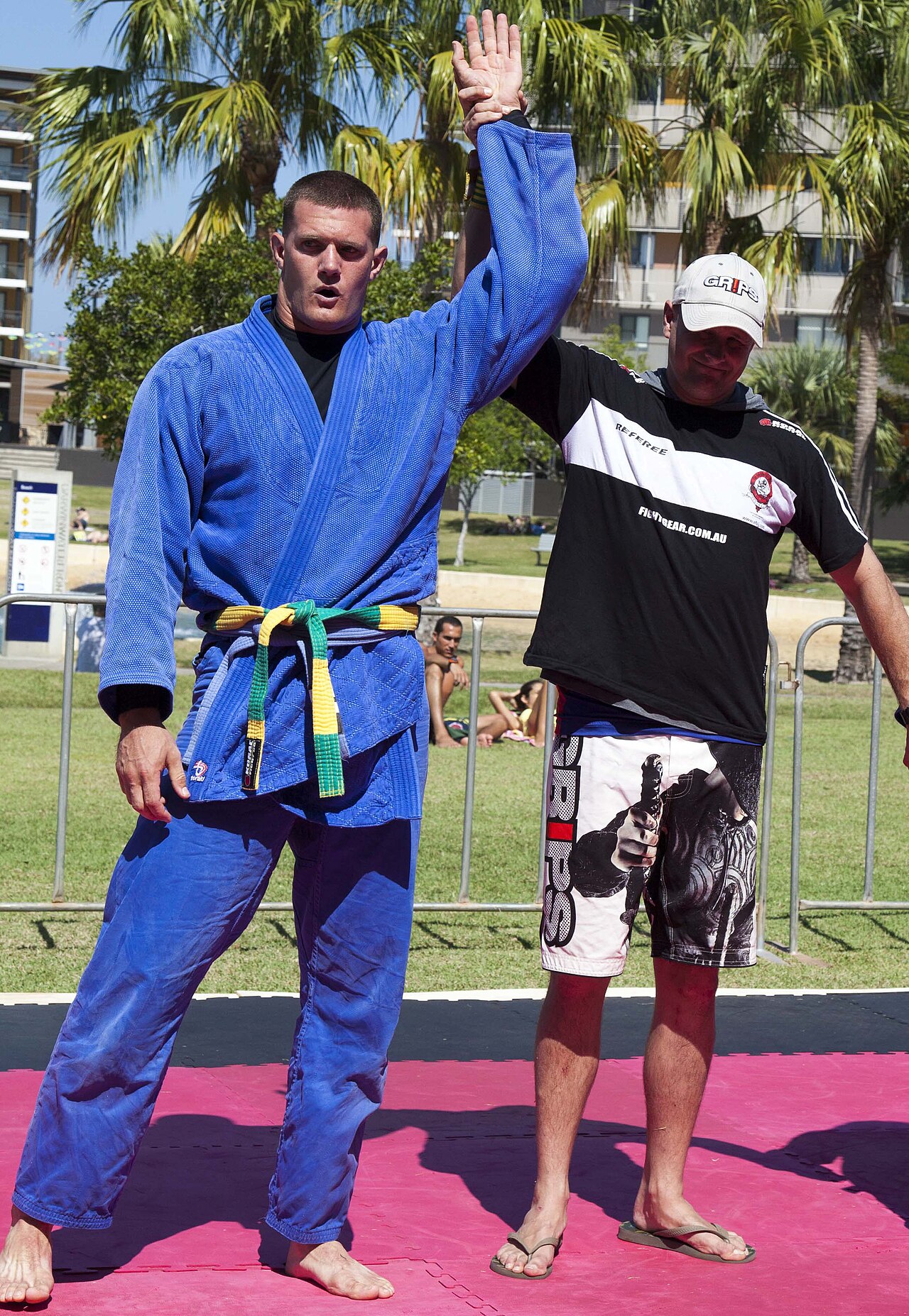
Your Child Wants to Compete. You're Terrified.
Your kid came home from BJJ class and said the words every parent of a young grappler eventually hears: "Coach says there's a tournament coming up. Can I do it?"
And just like that, your stomach drops.
You've watched your child train and come off the mat grinning. But a competition? Against kids from other academies? What if they lose? What if they get hurt?
Take a breath. Every parent at every BJJ academy in Laval, Montreal, Quebec, and across Canada has felt exactly this way. It's normal, understandable, and almost always unfounded.
Competition in kids' Brazilian Jiu-Jitsu is one of the most controlled, safe, and genuinely positive experiences a young athlete can have - when they're properly prepared. This guide covers everything: the preparation timeline, what tournament day actually looks like, how scoring works, and how to manage both your child's emotions and your own.
Is My Child Ready? The Honest Assessment
Not every child is ready to compete, and that's perfectly fine. Competition should never be forced or pressured. Here's how to assess readiness:
Signs your child IS ready:
- They enjoy rolling (sparring) in class and seek it out
- They can handle losing a round without emotional meltdown
- They're asking about competing on their own - the desire comes from them
- Their coach has mentioned they're developing well
- They've been training consistently for at least 4-6 months
Signs to wait:
- They're still uncomfortable with physical contact during rolling
- Losing a round in class causes tears or anger that takes more than a minute to resolve
- They haven't expressed interest - you're the one who wants them to compete
- They've been training less than 3 months
- Their coach hasn't brought up competition as an option
The most important indicator is your child's own desire. A child who asks to compete is ready to handle the experience, win or lose. A child who's being pushed into it is set up for a negative memory that can damage their relationship with the sport.
Talk to your child's coach at Gracie Laval. They see your child on the mat every week and have the clearest picture of readiness. If they say "not yet," trust that judgment.
Kids BJJ Program (Ages 3-13)
Apprentice, Junior, and Teens classes. First class free.
Explore Kids ProgramThe Preparation Timeline
8 Weeks Before: Decision and Registration
Once you and your child decide to compete, register early. Tournaments often have registration deadlines 2-4 weeks before the event, and popular divisions fill up.
You'll need:
- Your child's current belt rank and stripe count
- Their weight - kids compete in weight divisions to ensure fair matchups
- Their age - IBJJF and most tournament organizations use specific age brackets
- A current academy membership and in some cases, a federation membership (IBJJF requires one for their events)
6 Weeks Before: Focused Training Begins
This is when training shifts from general development to competition-specific preparation. At Gracie Laval, our coaches adjust your child's training focus:
- Sharpening their A-game. Rather than learning new techniques, competition prep focuses on perfecting 3-5 moves your child can execute reliably under pressure
- Live sparring with intent. Rolling becomes more goal-oriented - starting from specific positions, working on takedowns, practicing the first 30 seconds of a match
- Cardio conditioning. Competition matches are more intense than regular rolling. Your child's conditioning should match that intensity
2 Weeks Before: Mental Preparation
This is when the psychological work matters most.
- Talk about expectations openly. Winning is great, but the goal of a first competition is the experience itself. Make sure your child knows that you'll be proud of them regardless of the outcome
- Visualize the day. Walk through what tournament day looks like: arriving, warming up, waiting, hearing their name called, stepping onto the mat, competing, shaking hands afterward
- Normalize nervousness. Every competitor - from white belt kids to black belt world champions - feels nervous. Butterflies are fuel, not a problem. Tell them: "Being nervous means you care. And caring is exactly right."
The Week Before: Taper and Prepare
- Reduce training intensity in the final 3-4 days. Light drilling, no hard rolling. The goal is to arrive fresh and healthy
- Confirm the logistics: tournament location, check-in time, your child's division, what to bring
- Pack the tournament bag together (checklist below)
What Tournament Day Actually Looks Like
Here's the reality of kids' BJJ tournament day, stripped of the anxiety your imagination has been building:
Arrival, Warm-Up, and Waiting
You'll arrive at a venue - typically a large gym or convention center. Check in at registration, confirm your child's division, and receive a bracket. Then find a quiet corner for warm-up: light movement, stretching, basic drills. This is when your calm energy matters most. If you're visibly anxious, your child absorbs that. Stay relaxed. Treat it like just another day at the academy.
The waiting is the hardest part - for parents. You might wait 30 minutes or 2 hours. Bring snacks, water, and patience.
The Match
A referee will call your child's name and their opponent's name. They'll step onto the mat, bow, shake hands, and the referee will start the match. Matches for kids typically last 3-5 minutes depending on age and belt level.
Here's what you need to know: it happens fast. All that preparation condenses into a few minutes of focused effort. And regardless of the outcome, when it's over, your child will have done something most adults never do - stepped onto a mat, faced an unknown opponent, and tested themselves.
After the Match
Win or lose, the first thing your child should do is shake their opponent's hand. Then come to you. Then celebrate the courage it took to compete, not the result.
How Scoring Works (IBJJF Rules)
Understanding the scoring system removes a huge layer of confusion and anxiety. Here's the simplified version:
Points
| Action | Points |
|--------|--------|
| Takedown | 2 |
| Sweep (reversing from bottom to top) | 2 |
| Knee on belly | 2 |
| Guard pass | 3 |
| Mount | 4 |
| Back mount (taking the back) | 4 |
Advantages
When a competitor almost achieves a scoring position but doesn't fully complete it, the referee awards an advantage. Advantages are the tiebreaker if points are equal.
Submissions
If your child (or their opponent) successfully applies a submission and the other person taps, the match ends immediately. The tap is sacred in BJJ - it's the universal signal that means "I give up this position." Every child is taught to tap early and often in training. There is no shame in tapping. It's a safety mechanism and a sign of intelligence.
Penalties and Safety Rules
Stalling and certain illegal techniques result in penalties. For kids' divisions, the rules are more restrictive - many submissions that are legal for adults are prohibited for children. IBJJF age brackets (Mighty Mite through Teen) each have specific rule modifications, with younger divisions having shorter matches and heavier referee intervention. The rule set prioritizes safety above competition at every level.
Thomas Paquette: What Competition Builds
At Gracie Laval, we've seen firsthand what competition does for young athletes. Thomas Paquette is one of our standout competitors - a young grappler whose journey through the competition circuit exemplifies everything positive about kids' BJJ tournaments.
Thomas's success didn't come from raw talent alone. It came from consistent training, mental preparation, and the willingness to test himself when the outcome wasn't guaranteed. That willingness is what competition builds. Whether your child follows Thomas's path to podium finishes or competes once and decides it's not for them, the experience of facing a challenge and seeing it through changes how they see themselves. That self-image shift is worth more than any medal.
Managing YOUR Nerves (The Part Nobody Talks About)
Here's the truth that tournament-experienced parents know: watching your child compete is harder than competing yourself. You can't help. You can't intervene. You just watch.
Do:
- Stay calm on the outside. Your child will look at you between matches. What they see on your face matters enormously
- Cheer positively. "Great job!" and "Keep going!" are helpful. Technique coaching from the sidelines is not - it contradicts what their coach is saying
- Celebrate effort, not results. "I'm so proud that you competed" builds resilience. "Great job winning" teaches them your pride is conditional on victory
Don't:
- Don't coach from the stands. Your child has a coach. Let them do their job
- Don't criticize the opponent, the referee, or the tournament. Ever
- Don't make the car ride home about what went wrong. Make it about what was brave
The Tournament Bag Checklist
Pack the night before: competition gi and backup gi, rash guard, flip-flops, two water bottles, electrolyte drinks, light snacks (bananas, granola bars), towel, change of clothes, academy/federation card, registration confirmation, small first aid kit (tape, bandages), and something to pass the time during waits.
The Question After the First Tournament
After your child's first competition - whether they win gold or lose in the first round - the question that matters most is simple:
"Did you have fun? Do you want to do it again?"
If the answer is yes, you've just watched the beginning of a competitive journey that will teach your child more about resilience, preparation, and self-belief than any classroom or camp ever could.
If the answer is no, that's equally valid. Competition isn't for everyone, and there is zero shame in deciding that training for personal development is more fulfilling than competing. Many of the best martial artists in the world never competed. The mat has room for everyone.
At Gracie Laval, part of the Renzo Gracie network in Laval, Quebec, we support both paths equally. Our coaching staff prepares competitors with the same dedication they bring to every student who walks through the door - because the goal is the same: building confident, capable, resilient young people.
Book a free trial class to see if BJJ is right for your child, or call (438) 533-4348. Email coach@gracielaval.com with any questions about our kids' programs or upcoming competition opportunities.
Your child is braver than you think. Let them prove it.