 EN
EN FR
FR 中文
中文 ES
ES PT
PT عربي
عربي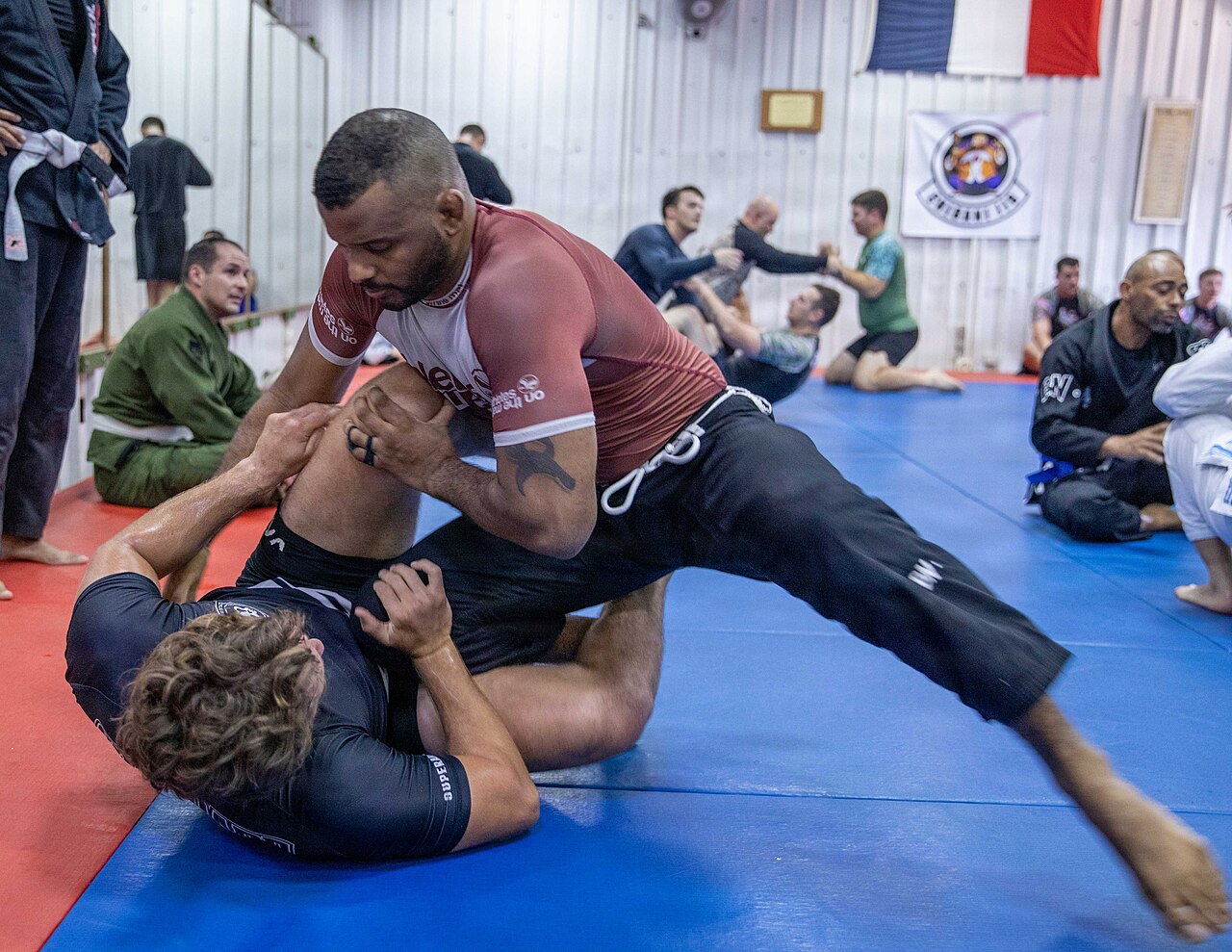
Why Not Try BJJ While Your Kid Trains?
Twice a week, you make the same drive. You park in the same lot at 3274 Blvd. Saint-Martin O in Laval. You walk your kid inside, wave to the coach, and sit in the same chair in the viewing area.
For the next hour, you watch your child do something extraordinary. They grapple, they drill, they get tapped and bounce back, they earn stripes and stand a little taller. You can see the transformation happening in real time - the confidence, the discipline, the physical capability that wasn't there six months ago.
And somewhere in the back of your mind, every single time, there's a quiet voice: "What if I tried that?"
This article is for the voice. The one you've been ignoring. The one you've talked yourself out of with a dozen reasonable excuses. Because here's what hundreds of parents at Gracie Laval and BJJ academies across Montreal, Quebec, and Canada have discovered: trying one class changes everything.
Is It Too Late for Parents to Start BJJ?
Let's get these out of the way, because you've rehearsed them.
"I'm too out of shape."
The most common excuse and the most backwards. You don't get in shape for BJJ. BJJ gets you in shape. Every person currently training at Gracie Laval started exactly where they were physically. Nobody expects a 40-year-old parent who hasn't exercised in three years to keep up with the 25-year-old purple belt.
Within a month, you'll notice changes: better sleep, more energy, less back pain. Within three months, your body will feel like a different machine. That transformation starts with one class, not a prerequisite fitness plan.
"I'm too old."
There are people older than you at Gracie Laval right now, training twice a week and earning belts. BJJ is the rare physical discipline where technique genuinely beats athleticism. The leverage-based system was designed to allow a smaller, older person to control a larger, younger one. You don't age out of jiu-jitsu. You adapt within it.
"I'd embarrass myself."
In front of whom? Your child? They'll think you're a hero for trying. The other students? They were all beginners once - every single one - and the BJJ community has a near-universal respect for new students. The coaches? Professor Louis-Philippe and the team at Gracie Laval have guided hundreds of complete beginners through their first class. Your awkwardness isn't embarrassing to them. It's familiar.
The truth is, the only person who would judge you for being new is you. And that voice gets quieter the moment you step on the mat.
"I don't have time."
You already have the time. You're already at the gym for an hour while your kid trains. Instead of scrolling your phone in the viewing area, you could be on the mat getting the best workout of your week. The schedule already exists. The drive is already happening. You're just watching instead of participating.
"It's my kid's thing."
This is the most interesting excuse, because it reveals something important: you believe that your child's development matters, but your own development can wait. It can't. And your child knows it. Kids whose parents train alongside them report feeling more connected, more supported, and more motivated. You don't take away from their experience by joining it. You amplify it.
Adults BJJ Program (14+)
Gi fundamentals, takedowns, and competition training. 5 classes per week.
Explore Adults ProgramWhat Actually Happens in Your First Class
You walk in. The coach greets you. Someone lends you a gi (the uniform) if you don't have one - and you won't have one. You don't need to bring anything except water and a willingness to feel clumsy for 60 minutes.
The warm-up (10 minutes): Hip escapes, forward rolls, jogging around the mat. Your body will feel uncoordinated. This is normal. Everyone felt this.
Technique instruction (20-25 minutes): The coach demonstrates a technique - a sweep, an escape, a submission. Then you drill it with a partner. Someone will volunteer to work with you (BJJ culture - beginners always get a willing partner). You'll get it wrong several times and then you'll get it right, and that small satisfaction is the hook.
Rolling / sparring (15-20 minutes): You'll partner with someone appropriate for your level. You'll probably spend most of it confused and pinned. You'll also have one or two moments where something works - and you'll feel a rush of satisfaction that has been missing from your life.
Cool-down (5 minutes): Stretching, high-fives, handshakes. You'll be soaked in sweat and tired in a way that a gym workout never produced. Something will feel different. Like a door opened a crack.
Most parents who try one class at Gracie Laval are back the following week. Not because anyone pressured them. Because the door opened and they wanted to walk through it.
Does Training Together Bond Parent and Child?
Here's what nobody tells you about becoming a parent: somewhere along the way, you stopped being a beginner at anything.
Think about it. When was the last time you were truly new at something? Not a new job where you at least had transferable skills. Not a new recipe where you at least knew how to cook. Something where you were genuinely, completely, uncomfortably new - with no idea what you were doing and no way to fake competence.
For most parents, the answer is years. Maybe decades.
This matters more than you realize. Psychologist Carol Dweck's research on growth mindset shows that adults who regularly place themselves in beginner situations maintain cognitive flexibility, emotional resilience, and a capacity for joy that adults who only operate in their comfort zones gradually lose.
You tell your kids to try new things. You encourage them to fail and learn. You celebrate their courage when they walk into an unfamiliar room. When was the last time you did the same?
BJJ gives you the chance to be a beginner again - with all the humility, frustration, wonder, and growth that comes with it. And that experience doesn't just benefit you. It makes you a better parent. Because now when you tell your child "it's okay to be bad at something new," you're not reciting a platitude. You're speaking from the mat you trained on last Tuesday.
How Does Training Change How You See Your Child?
It follows a predictable pattern. We've seen it hundreds of times at Gracie Laval.
Week 1: You try a class. You're awkward and sore. You liked it more than you expected.
Month 1: You're coming twice a week. You bought a gi. You know three techniques and you're obsessed with understanding the fourth. Your kid thinks it's cool that you train - they ask you about class, and suddenly you're having conversations that don't involve nagging about homework.
Month 3: Your body has changed. Not dramatically - but you stand differently. Your back hurts less. You sleep deeper. You have more patience at work because training gave you an outlet for the stress that used to build all week with nowhere to go. Friends start commenting that you look different. You do.
Month 6: You earned your first stripe. You didn't think it would matter - it's a piece of tape on a belt - but when the coach tied it on in front of the class, something shifted. Real pride. The kind that comes from doing something hard when nobody required it of you. Your child was watching. They've never looked at you quite like that before.
Year 1: Jiu-jitsu is part of your identity now. You and your kid share a physical practice, a community, and a language that belongs to both of you. The relationship has deepened in ways you couldn't have predicted sitting in that chair a year ago.
This isn't fiction. This is the documented experience of families from Chomedey, Fabreville, Sainte-Rose, Vimont, Duvernay, and across the greater Montreal area who walk through our doors at Gracie Laval.
The Cialdini Effect: Why You'll Actually Follow Through This Time
Robert Cialdini's psychology research explains why you've put this off - and why this moment might be different.
Commitment and consistency: You preach trying new things to your child. Every week you sit in that chair, the gap between what you preach and what you practice grows. Trying a class aligns your actions with your values.
Social proof: Over 151 families train at Gracie Laval. Many started exactly the way you're considering: parent watches, parent wonders, parent tries. People just like you - not athletes, not fighters, just parents - did this and loved it.
Scarcity: Your kids are growing up. The window where you share a schedule and the logistical ease to train at the same academy is finite. The years you think stretch ahead of you disappear faster than any round on the mat.
Liking: You already know the academy, the coaches, the environment. The barrier isn't unfamiliarity - it's just the inertia of the chair you've been sitting in.
Spring and Summer: The Perfect Time
The timing is strategic, not accidental. Spring and summer offer:
- Longer days - more energy after work, more daylight driving home
- Lighter schedules - school winds down, your calendar opens
- The "new season" psychology - your brain is primed for fresh starts
- Weather that supports recovery - warm mornings make post-training soreness easier to move through
If you're going to try one class, the next few weeks are when the friction is lowest and the motivation is highest.
Adults BJJ Program (14+)
Gi fundamentals, takedowns, and competition training. 5 classes per week.
Explore Adults ProgramWhat You Need to Do (It's Simple)
You don't need to buy a gi. We'll lend you one.
You don't need to be fit. The class meets you where you are.
You don't need to tell anyone. Just show up.
You don't need to commit. One class. Free. No contract. No sales pitch.
You just need to do one thing differently the next time you park at Gracie Laval: instead of sitting in the chair, walk onto the mat.
Your child has been showing you the way for months. Maybe it's time to follow them.
Book your free trial class or call (438) 533-4348. We're at 3274 Blvd. Saint-Martin O, Suite 201, Laval - free parking at the door. Serving families across Laval, Montreal, the North Shore, and all of Quebec. Part of the worldwide Renzo Gracie network.
Adults BJJ Program (14+)
Gi fundamentals, takedowns, and competition training. 5 classes per week.
Explore Adults Program