 EN
EN FR
FR 中文
中文 ES
ES PT
PT عربي
عربي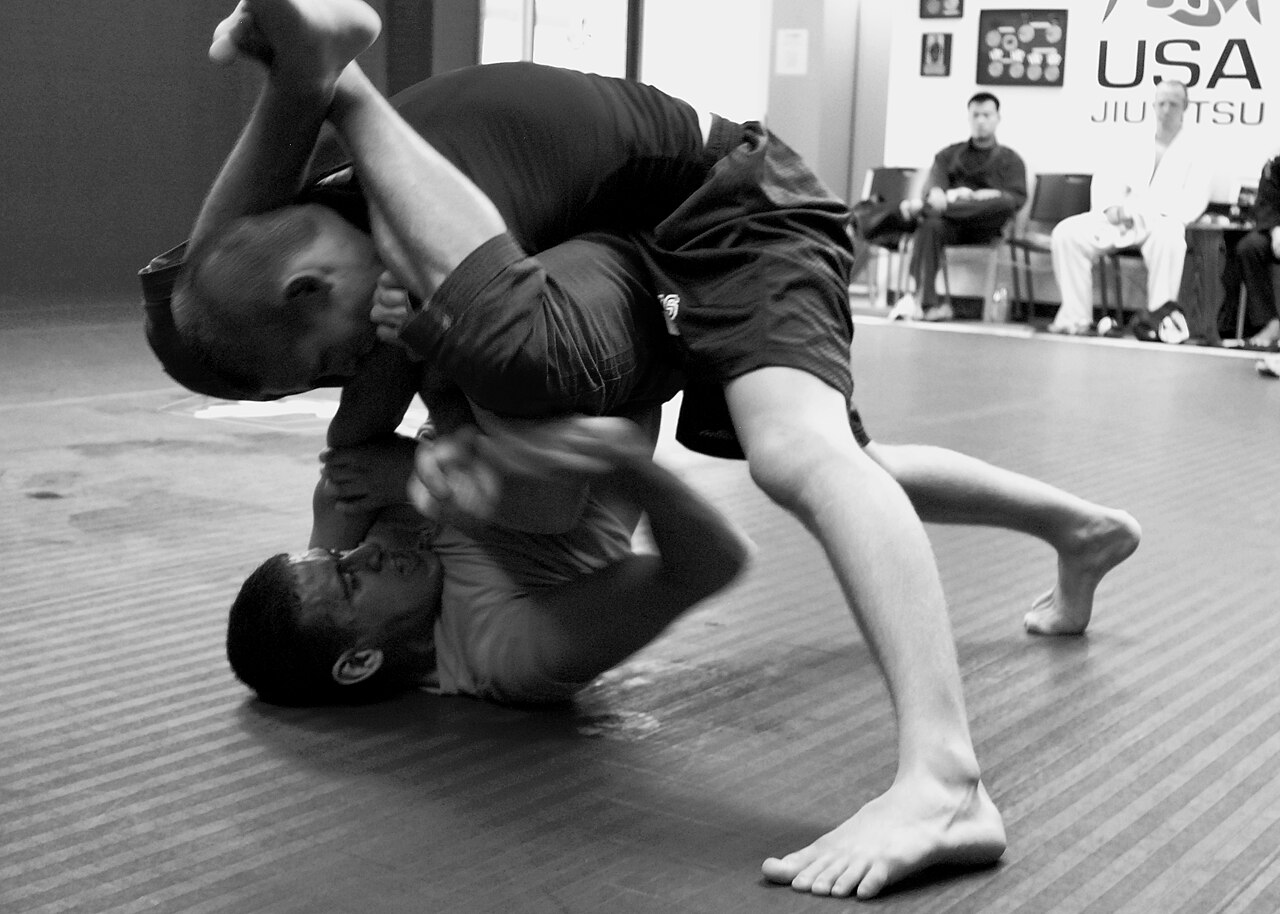
The First Question Every Beginner Asks
You told a friend you're starting BJJ. Their first response: "Gi or No-Gi?" You had no idea there was a choice. Now you've spent an hour on Reddit and you're more confused than before.
Half the internet says the Gi is the only real jiu-jitsu. The other half says No-Gi is the future and the kimono is a relic. Both sides argue like they're defending a religion. And you're sitting there thinking, "I just wanted to learn how to not get choked."
Here's the truth that both camps hate: neither is better. They're different games played on the same board. The right one depends on what you want out of training - and the smartest move might be training both. This guide gives you everything you need to decide without the tribal warfare.
What Is Traditional Gi Jiu-Jitsu?
The Gi (also called a kimono) is the traditional uniform of Brazilian Jiu-Jitsu - a heavy cotton jacket, pants, and a belt indicating your rank. It's the outfit you picture when someone says "martial arts."
But the Gi isn't just clothing. It's a tool - and it fundamentally changes how jiu-jitsu works.
How the Gi Changes the Game
The Gi provides dozens of grip points that don't exist in No-Gi. You can grab the collar, the sleeves, the lapel, the pants, the belt. Your opponent can do the same to you. This creates a grappling environment that's:
- Slower and more methodical. Grips create friction and control. Escaping positions requires breaking grips first, which adds layers of complexity
- More technique-dependent. Because you can anchor yourself using the Gi, brute strength and speed matter less. A smaller, weaker person with better grips and technique can consistently control a larger opponent
- Rich with submissions. The Gi opens up entire categories of chokes and controls that don't exist without it - collar chokes, lapel guards, sleeve-based submissions. Your toolkit essentially doubles
The Gi Training Experience
A typical Gi class at Gracie Laval looks like this:
You bow onto the mat in your white Gi (everyone starts with white). The class works a technique - say, a cross-collar choke from mount. You drill it with a partner, gripping the thick cotton of their collar, learning to position your hands precisely. The instructor shows three variations. You drill each one.
Then you roll (spar). The Gi is hot. It's heavy when it absorbs sweat. Your grips fatigue because you're gripping cotton for the entire round. When someone gets a deep collar grip on you, you feel the fabric tighten around your neck and you have about three seconds to address it before the choke sinks in.
It's chess at close range. Every grip is a move. Every grip break is a counter-move. The pace is deliberate, the technique is intricate, and the learning curve rewards patience over athleticism.
Is No-Gi Faster and More Intense?
No-Gi BJJ is grappling without the traditional uniform. You typically wear a rash guard (a fitted athletic top) and shorts or spats. No jacket. No collar. No sleeve grips. Just skin, sweat, and whatever you can hold onto.
How No-Gi Changes the Game
Remove the Gi and the entire dynamic shifts:
- Faster and more scramble-heavy. Without fabric to grip, positions are harder to maintain. Everything is slippery. Transitions happen at higher speed, and the ability to react quickly becomes critical
- More athleticism-dependent. Speed, strength, and explosiveness play a bigger role when there's nothing to grab. This doesn't mean technique doesn't matter - it absolutely does - but physical attributes have more influence than in the Gi
- Different grip system. Instead of collar and sleeve grips, you use underhooks, overhooks, wrist control, and body locks. The control system is based on body position rather than fabric manipulation
- Focused submission set. Without collar-based chokes, the submission game centers on guillotines, darces, arm locks, leg locks, and rear-naked chokes. Many No-Gi practitioners develop deep expertise in leg attacks
The No-Gi Training Experience
A No-Gi class feels different from the moment you step on the mat. There's no jacket to straighten, no belt to tie. You slap hands with your drilling partner and start working.
The techniques often emphasize wrestling-based entries, body lock passes, and submissions that work without grips. The drilling is faster. When you roll, the pace is noticeably higher - positions change rapidly, and the person who can chain techniques together fastest often has the advantage.
You'll notice you're sweating more (no cotton to absorb it) and that your training partner is harder to hold onto. This isn't a bug - it teaches you to control with your body position rather than your hands, which is a fundamental grappling skill.
Adults BJJ Program (14+)
Gi fundamentals, takedowns, and competition training. 5 classes per week.
Explore Adults ProgramThe Pros and Cons, Side by Side
Gi BJJ: Advantages
- Forces technical precision. You can't muscle your way out of a deep collar grip. You have to use technique
- Slower learning curve feels more manageable. Beginners often find the Gi less chaotic and easier to process
- More submission variety. Collar chokes, lapel guards, and Gi-specific techniques expand your arsenal significantly
- Better for smaller practitioners. The friction and grip options of the Gi reduce the impact of size and strength differences
- Traditional belt system. You wear your rank, which provides visible progression milestones (see our complete belt guide)
- Builds grip strength. Gripping cotton for an hour builds forearm and hand strength that transfers to everything else in life
Gi BJJ: Disadvantages
- Hot. Especially in summer. A cotton jacket that absorbs sweat is not a cooling garment
- Slower pace may frustrate action-oriented beginners who want more dynamic movement
- Gi-specific techniques may not transfer directly to real-world self-defense (attackers don't wear kimonos)
- Gi burn. Collar drags across the neck and forearm friction against the jacket are just part of the experience
- Equipment cost. A quality Gi runs $100-200, and you'll want at least two for training multiple times per week
No-Gi BJJ: Advantages
- More applicable to self-defense and MMA. The techniques translate directly to real-world scenarios where nobody is wearing a heavy jacket
- Faster pace. If you like dynamic, high-energy training, No-Gi delivers
- Develops body awareness. Without grips to rely on, you learn to control with your entire body - hips, legs, weight distribution
- Simpler equipment. Rash guard and shorts. That's it
- Modern competition scene. The biggest grappling events in the world (ADCC, WNO) are primarily No-Gi
- Leg lock development. The No-Gi meta has advanced leg attacks far beyond what most Gi practitioners experience
No-Gi BJJ: Disadvantages
- Steeper initial learning curve. Everything is faster and more slippery. Beginners can feel overwhelmed
- More physically demanding. Without grips to slow things down, you need more conditioning to keep up
- Smaller technique library. No Gi-based submissions means fewer tools, especially at the beginner level
- Athleticism matters more. Size and strength differences are more apparent without the equalizing effect of Gi grips
- Harder to hold positions. Sweat makes everything slippery. Maintaining control requires constant adjustment
Are Techniques Different in Gi vs No-Gi?
If your primary motivation for training is self-defense - particularly relevant for women and anyone concerned about personal safety - this question has a nuanced answer.
The "No-Gi is more realistic" argument: People don't wear Gis on the street. If you're defending yourself, you're dealing with t-shirts, jackets, and bare skin - closer to No-Gi conditions than Gi conditions.
The counter-argument: Actually, in Montreal and Quebec, people wear heavy jackets for six months of the year. A winter coat is basically a Gi. Collar grips, sleeve control, and fabric manipulation are absolutely applicable to real-world altercations in cold climates.
The real answer: Both styles teach you to control a resisting human being. The specific grips differ, but the underlying principles - positional hierarchy, leverage, weight distribution, submission mechanics - are the same. A blue belt in either style has meaningful self-defense capability. The difference is in the details, not the fundamentals.
Which Style Should You Start With?
This is the question everyone wants answered, and the honest answer is: it depends on you.
Start with Gi if:
- You're completely new to grappling and want a more structured, methodical learning environment
- You're smaller than average and want the grip advantages to level the playing field
- You value tradition and the visible progression of the belt system
- You prefer chess over checkers - the strategic depth of the Gi appeals to you
- You're starting BJJ later in life and want a pace that accommodates your body
Start with No-Gi if:
- You have a wrestling or MMA background and want to build on existing skills
- You're primarily motivated by self-defense in practical scenarios
- You prefer fast-paced, dynamic training over methodical grip fighting
- You're interested in modern competition grappling (ADCC-style)
- You find the idea of wearing a heavy cotton jacket in summer unappealing
Or - Start with Both
At Gracie Laval, we offer both Gi and No-Gi classes because we believe in the Renzo Gracie approach: complete jiu-jitsu means being comfortable everywhere.
Renzo Gracie himself has always emphasized that the best practitioners are those who can adapt to any ruleset, any uniform, any situation. His lineage - which Gracie Laval is proud to carry - has produced champions in both Gi and No-Gi competition precisely because the training philosophy doesn't limit itself to one style.
Many of our members train Gi on some days and No-Gi on others. Over time, each style strengthens the other:
- Gi training improves your No-Gi by teaching precision and patience. When you go back to No-Gi, your technique is tighter
- No-Gi training improves your Gi by forcing you to develop body-based control. When you go back to the Gi, your pressure and movement are better
- Training both develops complete grappling - you become the practitioner who's dangerous everywhere, not just in one context
Should Beginners Start with Gi or No-Gi?
"Gi BJJ is for old-school purists"
False. The Gi game is evolving rapidly. Modern Gi competitors use lapel guards, worm guards, and techniques that didn't exist ten years ago. The Gi is traditional in format but innovative in content.
"No-Gi is just for MMA fighters"
False. The majority of No-Gi practitioners never compete in MMA. They train No-Gi because they enjoy the pace, the style, and the community. It's a complete martial art in its own right.
"You have to pick one"
False. Most elite grapplers train both. Most hobbyists benefit from training both. The idea that you must choose a lane is an internet debate, not a real-world requirement.
"No-Gi is easier because there are fewer techniques"
False. Fewer techniques doesn't mean simpler. The speed and physical demands of No-Gi make it challenging in different ways. A No-Gi roll against a skilled opponent is one of the most exhausting experiences in any sport.
"Gi BJJ doesn't work for self-defense"
False - especially in Quebec. See the winter coat argument above. Plus, the positional control and submission principles you learn in the Gi transfer directly regardless of what anyone is wearing.
Adults BJJ Program (14+)
Gi fundamentals, takedowns, and competition training. 5 classes per week.
Explore Adults ProgramSee Both Styles at Gracie Laval
The best way to understand the difference isn't to read about it - it's to experience it.
Gracie Laval offers both Gi and No-Gi training under the Renzo Gracie lineage, with experienced instruction that emphasizes fundamentals in both styles. Whether you start in the Gi, start No-Gi, or try both from day one, you'll be learning from a program that values complete jiu-jitsu.
Your first class is free - Gi or No-Gi, your choice. Show up 15 minutes early at 3274 Blvd. Saint-Martin O, Suite 201, Laval, Quebec. If you want to try the Gi, we'll get you fitted. If you want to try No-Gi, just bring a rash guard and shorts (or a t-shirt and athletic shorts work fine for your first class).
Call (438) 533-4348 or book online. Tell us which style interests you - or tell us you want to try both. We'll build a plan that works.
The Gi-vs-No-Gi debate will rage on forever. But you don't have to pick a side from your couch. Pick a class, show up, and let the mat tell you what you like.