 EN
EN FR
FR 中文
中文 ES
ES PT
PT عربي
عربي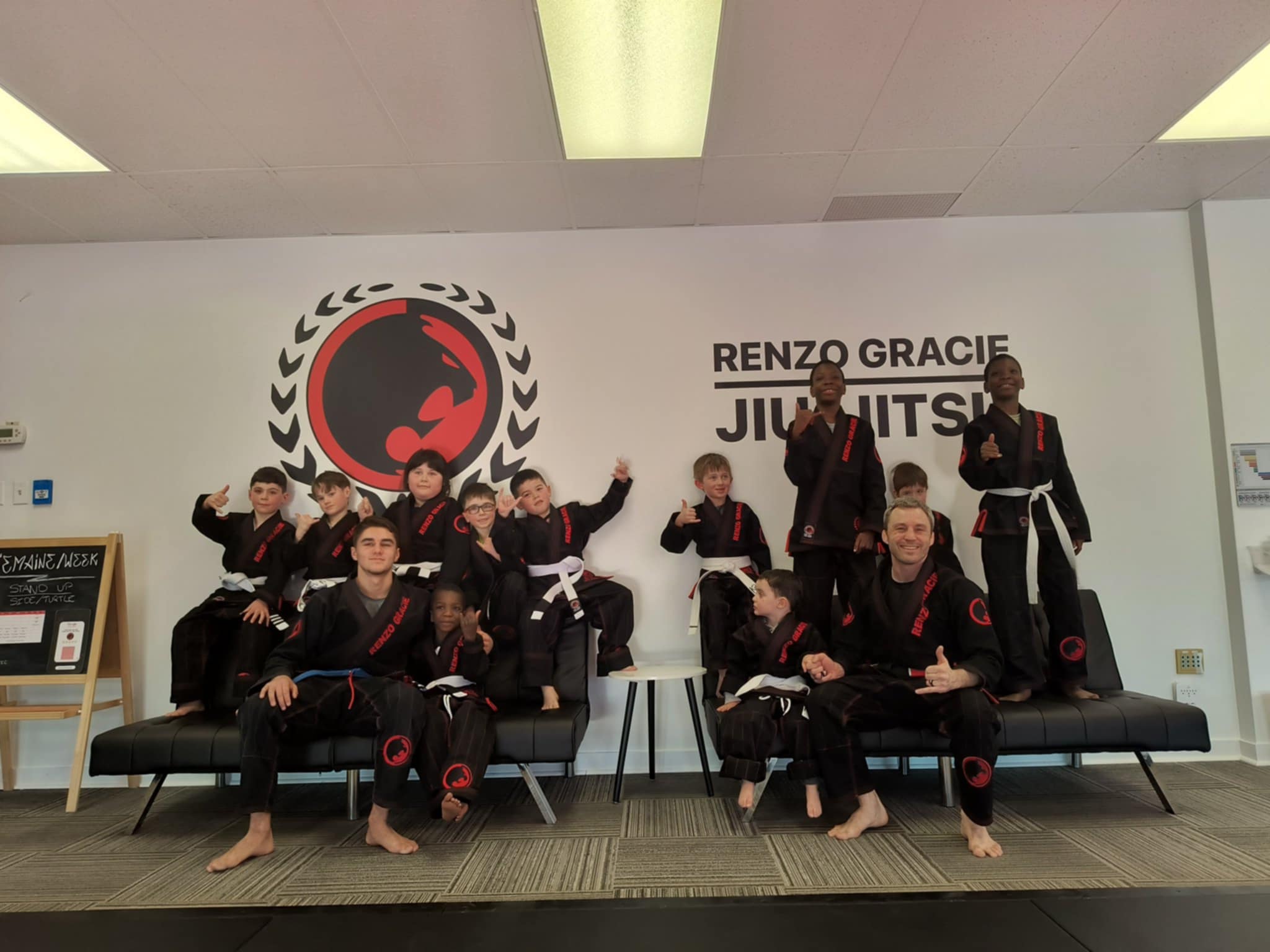
The Worry That Brings You Here
Every parent who walks through the door at Gracie Laval carries the same thing: a worry they can't quite name.
Maybe your child is shy. Maybe they struggle with focus. Maybe they've tried three different sports and quit each one after a month. Maybe they come home from school with a look on their face that tells you something happened but they won't say what. Maybe they're fine - but "fine" doesn't feel like enough.
You've Googled. You've asked other parents. You've scrolled through activities and programs and camps. And somewhere in that search, you found BJJ - maybe because a friend mentioned it, maybe because you saw a video, maybe because something about the idea of your child learning to handle difficulty felt right in a way you couldn't explain.
That instinct brought you here. And if the stories of other Gracie Laval families are any guide, that instinct is about to be proven right.
Iuliana's Story: The 3-Year-Old Who Finally Found His Sport
Iuliana Chiveri's son was three years old when she started looking for an activity that would stick. They had tried other sports. Nothing held his attention. Nothing made him want to go back.
Then they found Gracie Laval.
In Iuliana's own words, the transformation was immediate and unmistakable. Her son didn't just tolerate the classes - he looked forward to them. The structure of BJJ, with its clear instructions, physical engagement, and constant interaction with coaches and peers, gave him something the other sports hadn't: a reason to be present.
For parents of very young children, this story resonates deeply. At three, four, and five years old, the goal isn't belt promotions or competition readiness. The goal is engagement - getting a small child to listen, follow directions, interact with others, and enjoy the process. BJJ's format, with its partner drills, movement games, and immediate feedback, is uniquely suited to hold the attention of children who struggle with more traditional sports.
What Iuliana describes is what child development researchers call intrinsic motivation - the child wants to participate not because a parent is pushing them, but because the activity itself is rewarding. That shift from external motivation ("you have to go") to internal motivation ("I want to go") is one of the most important developments in a young child's life.
Eric's Story: Discipline and Confidence, Built From the Inside
Eric Pelletier watched his child transform through two qualities that every parent hopes for but few activities reliably deliver: discipline and confidence.
Eric's words carry the weight of a parent who has seen the difference between a child who follows rules because they're told to and a child who follows a practice because they understand its value. BJJ creates the second kind of discipline - not obedience, but self-regulation. The child learns to wait their turn, to listen before acting, to control their body when emotions are high, and to respect a hierarchy based on skill and effort rather than age or authority.
The confidence Eric describes isn't the loud, performative kind. It's the quiet certainty that comes from having been tested and having survived. When a child rolls with another student and gets submitted, then drills the same position until they can defend it, they learn something no pep talk can teach: you are capable of solving problems that feel impossible at first.
This is the psychology of self-efficacy - Albert Bandura's concept that confidence comes not from being told you're capable but from experiencing your own capability in action. Every time a child at Gracie Laval masters a technique they struggled with last week, their self-efficacy deepens. It's not abstract. It's felt in the body.
Eric's testimony echoes what we hear from dozens of parents every year. The child who wouldn't make eye contact now walks into school with their shoulders back. The child who crumbled at the first sign of difficulty now takes a breath and tries again. These aren't miracles. They're the predictable outcomes of a practice that challenges children in a controlled, supportive environment - repeatedly, consistently, over time.
Wilson's Story: The Self-Esteem Question
Wilson Stephane watched something shift in his child that is harder to measure than discipline or confidence but arguably more important: self-esteem.
Self-esteem is not confidence. Confidence says "I can do this." Self-esteem says "I am worth something." They're related, but they're different - and the second one is harder to build.
Many children struggle with self-esteem not because of any single event but because of the cumulative effect of a world that constantly evaluates them. School grades, social media comparisons, athletic rankings, peer hierarchies - by the time a child is ten, they've been measured and sorted hundreds of times. The message, whether intended or not, is: your value is conditional.
BJJ reverses this. On the mat, your value isn't conditional on winning. It's conditional on showing up and trying. The white belt who gets submitted every round but keeps coming back earns more respect in a BJJ academy than the talented student who quits when things get hard. The culture explicitly rewards persistence over performance.
When a child internalizes the message "I am someone who keeps going," their self-esteem builds on a foundation that external circumstances can't easily shake. That's the kind of self-esteem that carries into adolescence, into adulthood, and into every challenge they'll face. (For more on how BJJ builds resilience in young people, read BJJ for teens - building real confidence.)
Aline's Story: A Grandmother's Gift
Aline Dumont enrolled her 7-year-old grandson in BJJ at Gracie Laval. The decision to sign up a grandchild carries a particular weight - it's a gift that says "I believe this will matter for your life."
Aline's experience reflects a growing trend across Laval and the North Shore: grandparents who recognize in BJJ something that was missing from their own generation's childhood activities. Not just physical fitness, but emotional education - the ability to handle frustration, to recover from setbacks, to interact respectfully with peers, and to develop a sense of identity rooted in effort rather than talent.
At seven, a child's brain is in a critical period for developing executive function - attention, impulse control, emotional regulation, and goal-directed behavior. BJJ is uniquely effective here because it requires constant problem-solving under mild stress. The child isn't just moving - they're reading a partner's movements, making real-time decisions, and adjusting strategy moment to moment. It's cognitive training disguised as play.
What Aline gave her grandson wasn't just a sport. It was a framework for handling the complexity of growing up.
The Emotional Arc Every Parent Recognizes
If you're considering BJJ for your child, here's what to expect. Not the schedule or the techniques - those are on the website. Here's the emotional journey that parents at Gracie Laval describe, almost universally, in the same sequence.
Phase 1: The Worry (Week 1)
You're more nervous than your child. You sit in the viewing area, watching them on the mat, and every instinct says "they look lost." You wonder if you made the right choice. You compare them to the other kids who seem to know what they're doing. You think about whether to give it one more week or cut your losses.
This phase is normal. Every parent feels it. The children who look confident on the mat felt exactly the same way during their first week.
Phase 2: The Early Signs (Weeks 2-6)
Your child starts mentioning training at home. Not big declarations - small things. "We learned this cool move today." "My partner was really good." "Can we go tomorrow too?" The language shifts from passive ("I had to go to class") to active ("I want to go to class").
You notice them practicing a movement in the living room. They might not tell you they're doing it. You just catch them.
Phase 3: The First Test (Months 2-4)
Something difficult happens. A harder roll. A technique they can't get. A class where they felt frustrated. This is the moment that defines the trajectory.
In most activities, this is where children quit. In BJJ, the culture is designed to catch them. The coach notices. The training partners encourage. The child learns - maybe for the first time - that difficulty is not a reason to stop. It's the reason to continue.
Phase 4: The Transformation (Months 4-12)
This is what Iuliana, Eric, Wilson, and Aline are describing. The child who walks into the academy at month four is not the same child who walked in at week one. Their posture is different. Their eye contact is different. Their relationship with frustration is different. Their sense of self is different.
Parents describe this phase with the same word, over and over: they're different. Not in a way that erases who they were. In a way that reveals who they were always capable of becoming.
Adults BJJ Program (14+)
Gi fundamentals, takedowns, and competition training. 5 classes per week.
Explore Adults ProgramPhase 5: The Gratitude
This is the phase you're in when you write a Google review. When you tell another parent in the pickup line about the academy. When you sign up your second child. When you, yourself, try a class. (When that happens, read why every parent should try one BJJ class.)
It's the phase where the worry you walked in with feels distant - not because it was wrong, but because it was answered.
Why BJJ and Not Something Else
Laval is not short on children's activities. Soccer, hockey, swimming, dance, gymnastics, karate - the options are extensive. So why BJJ?
Because BJJ is the only activity that combines physical challenge, mental problem-solving, emotional regulation, and close human connection in every single class. And unlike team sports, your child's progress is theirs alone. They can't hide behind a team performance or blame a loss on a teammate. That individual accountability - within a supportive community - builds character that team sports alone cannot. (For a full comparison, read our guide to choosing the best sport for kids in Laval.)
The Decision You're Making Isn't About a Sport
When you sign your child up for BJJ, you're not choosing an extracurricular activity. You're choosing a practice that will shape how they handle difficulty for the rest of their lives.
The parents who shared their stories in this article didn't know that when they enrolled their children. They were just looking for something that might help - with focus, with confidence, with energy, with whatever worry brought them to the search bar.
What they found was bigger than they expected.
Your child's first class at Gracie Laval is free. Bring them to watch or bring them to try. Either way, you'll see within the first twenty minutes whether this is the thing you've been looking for.
Book a free trial for your child or call (438) 533-4348. We're at 3274 Blvd. Saint-Martin O, Suite 201, Laval - free parking at the door. Kids' programs for ages 3+. Serving families from Chomedey, Sainte-Rose, Vimont, Fabreville, Duvernay, and across the North Shore.
Kids BJJ Program (Ages 3-13)
Apprentice, Junior, and Teens classes. First class free.
Explore Kids Program