
 EN
EN FR
FR 中文
中文 ES
ES PT
PT عربي
عربي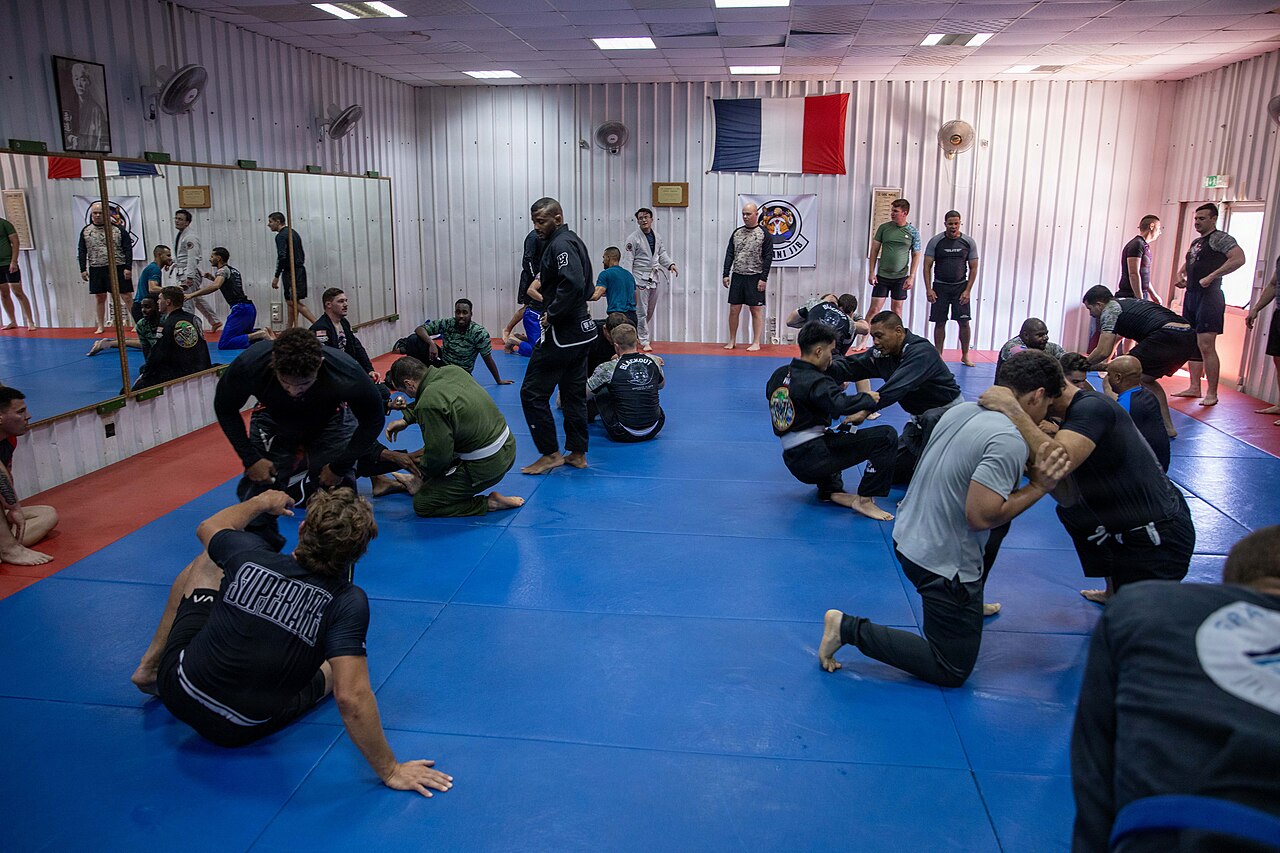
That Nervous Feeling? Everyone Has It.
You've been thinking about this for a while. Maybe weeks, maybe months. You've Googled "what to expect first jiu-jitsu class" at least three times. You've imagined walking in and having no idea what to do. You've pictured yourself being the worst person in the room.
Here's something that might surprise you: every single person on that mat felt exactly the same way before their first class. The purple belt who looks like they were born doing this? They were terrified on day one. The person who just got their blue belt? They almost didn't come back after their first session.
The anxiety you're feeling isn't a sign that BJJ isn't for you. It's a sign that you're about to do something meaningful. And by the time you finish reading this, you'll know exactly what happens from the moment you park your car to the moment you leave - and you'll realize there's genuinely nothing to worry about.
Before You Arrive
What to Wear
Keep it simple. Wear comfortable athletic clothing - shorts or joggers and a t-shirt. Avoid anything with zippers, buttons, belt loops, or hard pockets. These can catch fingers and toes during training.
At Gracie Laval, we provide the Gi (the traditional uniform) for your first class free of charge. You don't need to buy anything before you walk in. If you decide to continue training, your instructor will help you find the right Gi later.
Bring a water bottle. That's it.
When to Show Up
Arrive 15 minutes early. This gives you time to:
- Meet your instructor - either Professor Louis-Philippe or Coach Mani
- Get a quick tour of the academy
- Change into your gear
- Ask any last-minute questions without feeling rushed
This early window is important. Your instructor will learn your name, ask about any injuries or concerns, and make sure you feel comfortable before class starts. You won't be thrown into the deep end.
What Actually Happens in Class
Here's the full breakdown, minute by minute. No surprises.
Warm-Up (10 Minutes)
Class starts with a group warm-up. Light jogging around the mat, basic stretching, and some BJJ-specific movements like hip escapes and forward rolls.
Nobody expects you to be good at these. Half the room couldn't do a proper forward roll on their first day either. Your instructor will show you modified versions if anything feels uncomfortable. The goal is to get your body moving and warm, not to test your fitness.
If you're winded after the warm-up, that's completely normal. You're using muscles you've probably never used in this way. It gets easier fast - most people notice a difference by their third class.
Technique Instruction (20-25 Minutes)
This is the heart of every BJJ class. Your instructor will demonstrate 2-3 techniques, step by step, then you'll practice them with a partner.
On your first day, expect fundamentals: a basic position (like closed guard), a simple escape, and maybe a sweep or submission. The instructor breaks each move into small pieces and walks around the room checking everyone's form.
A few things that help beginners:
- It's okay to ask your partner to repeat the move
- It's okay to ask the instructor to show you again
- It's okay to be confused - technique clicks at different speeds for different people
- Nobody is keeping score
Your partner isn't trying to "beat" you. They're there to help you learn, and experienced students genuinely enjoy working with beginners. They remember what it was like.
Drilling / Light Practice (15-20 Minutes)
After learning the techniques, you'll drill them with a partner. This is controlled, repetitive practice - you take turns applying the move while your partner provides the right amount of resistance.
As a first-timer, you'll be paired with an experienced training partner. They know how to adjust their pace and intensity. They won't go hard on you. That's a cultural rule in every good BJJ academy, and at Gracie Laval, it's enforced.
If the class includes positional sparring (starting from a specific position), your instructor will let you know whether to participate or watch. There's zero pressure to do anything you're not ready for.
"I remember standing outside the gym for 10 minutes before walking in. My heart was pounding. Twenty minutes into class, I couldn't believe I'd been so anxious. Everyone was so welcoming. I've been training three times a week for eight months now." - Marc T., Gracie Laval member
Cool-Down (5 Minutes)
Class ends with stretching and a brief Q&A. Your instructor will check in with you specifically - how you felt, what was confusing, what you enjoyed. You'll shake hands (or fist-bump) with your training partners.
This is also when most people realize: that wasn't nearly as scary as I thought.
Adults BJJ Program (14+)
Gi fundamentals, takedowns, and competition training. 5 classes per week.
Explore Adults ProgramThe Safety Question
Let's address this directly, because it's the number one concern for beginners: will I get hurt?
BJJ is the safest martial art you can practice. Here's why:
- No striking. There is no punching, kicking, or hitting of any kind. Everything is based on leverage, angles, and control.
- The tap rule. When you feel uncomfortable - pressure, a stretch, anything - you tap your partner, and they release immediately. No exceptions. This is the most sacred rule in jiu-jitsu.
- Controlled environment. Beginners work with experienced partners who know how to modulate intensity. You're not being thrown in with someone trying to prove something.
- Instructor supervision. Professor Louis-Philippe and Coach Mani monitor every interaction on the mat. If anything looks off, they step in.
Injuries in BJJ are less common than in basketball, soccer, or recreational hockey. The sport is designed around control - not damage.
The Fitness Myth
"I need to get in shape before I start."
This is the single most common excuse, and it's completely backwards. You don't get fit to do jiu-jitsu. You do jiu-jitsu to get fit.
BJJ is a full-body workout that builds:
- Cardiovascular endurance - your heart rate stays elevated throughout class
- Functional strength - you're using real-world pushing, pulling, and gripping movements
- Flexibility - the positions naturally improve your range of motion
- Core stability - almost every technique engages your core
Most of our members at Gracie Laval were not "in shape" when they started. Some hadn't exercised in years. The class is designed to meet you where you are. You go at your own pace, rest when you need to, and improve week by week.
Within a month, you'll feel a noticeable difference. Within three months, people around you will notice.
What Happens After Your First Class
You'll probably feel two things simultaneously: exhausted and excited.
Your body will be sore in places you didn't know had muscles. Your brain will be replaying the techniques. You'll think about what you did wrong. You'll want to come back.
This is the BJJ effect. Unlike a treadmill or a spin class, jiu-jitsu engages your mind so completely that an hour passes without you checking the clock. The combination of physical exertion, problem-solving, and social connection is genuinely addictive.
At Gracie Laval, adult classes run Monday through Thursday at 7:15 PM and Saturday at 10:45 AM. Most beginners start with 2-3 classes per week and build from there.
You Already Know You Want to Try
If you've read this far, you're not someone who's casually browsing. You're someone who's ready. The only thing between you and your first class is a decision.
Your first class is free. No contract. No commitment. No sales pitch at the end. Just show up, train, and see how it feels. We're at 3274 Blvd. Saint-Martin O, Suite 201, Laval - free parking right at the door.
Book your free trial class or call (438) 533-4348. You can also email coach@gracielaval.com if you have questions first.
The only regret you'll have is not doing this sooner. Every member says it. Now you know why.